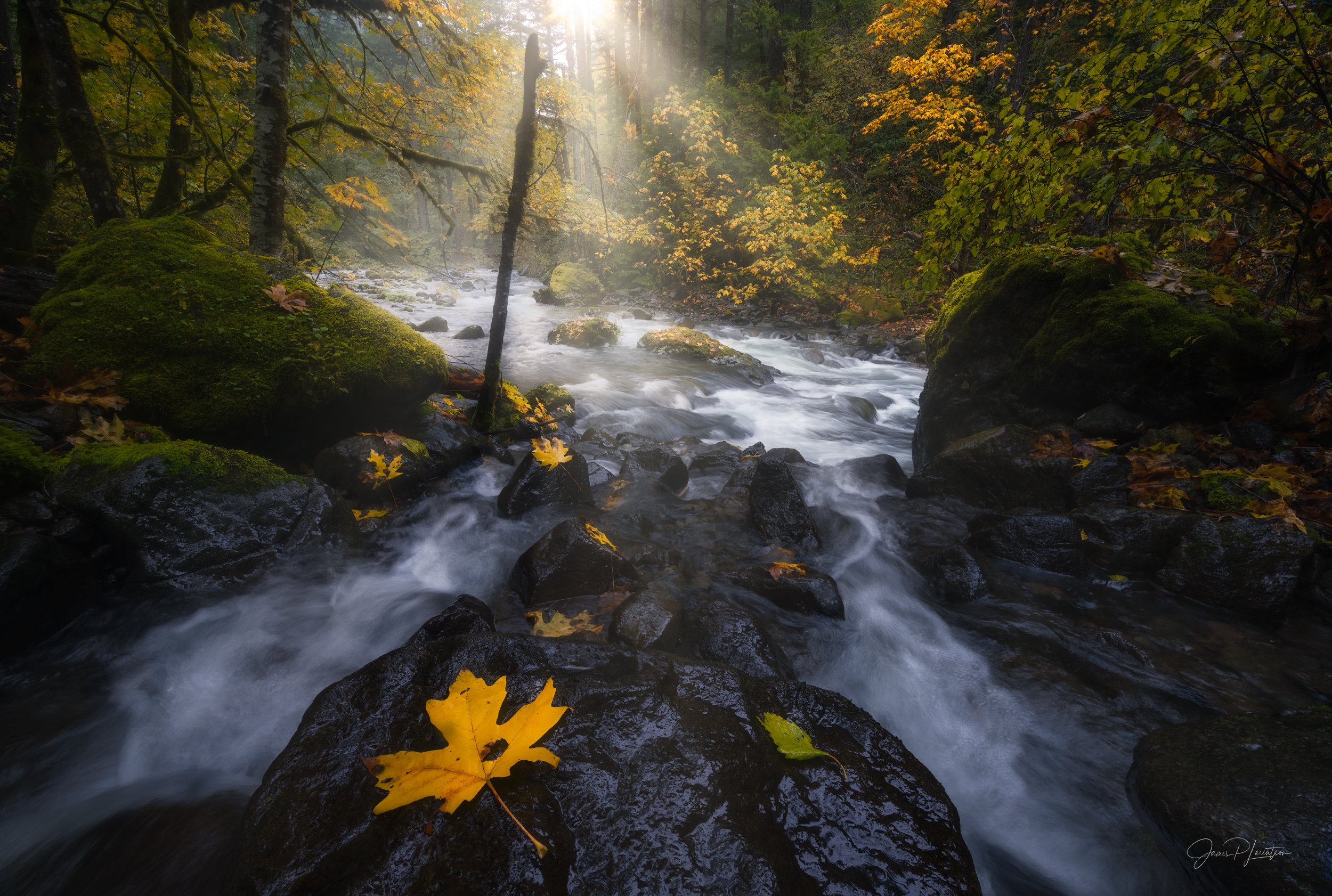
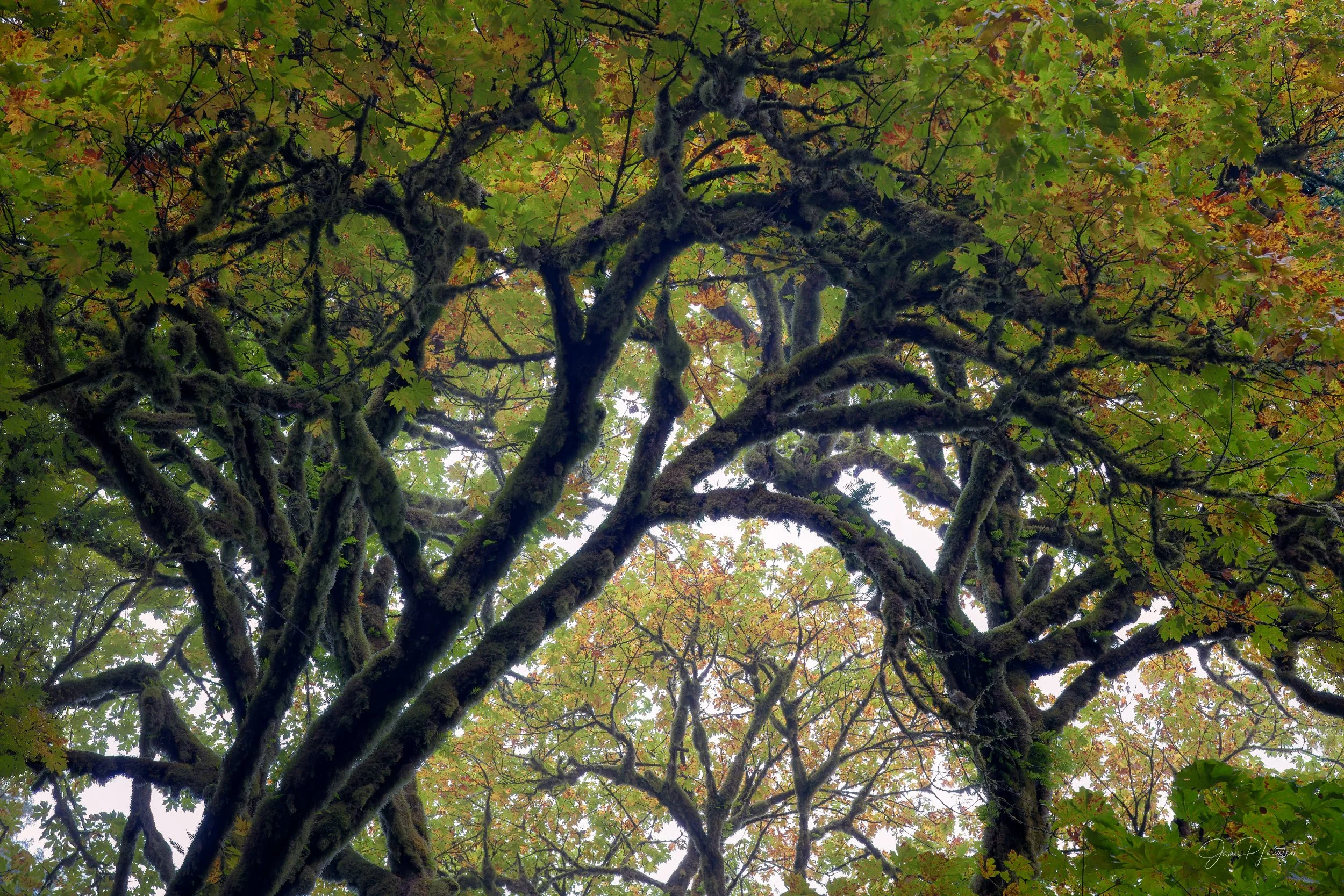
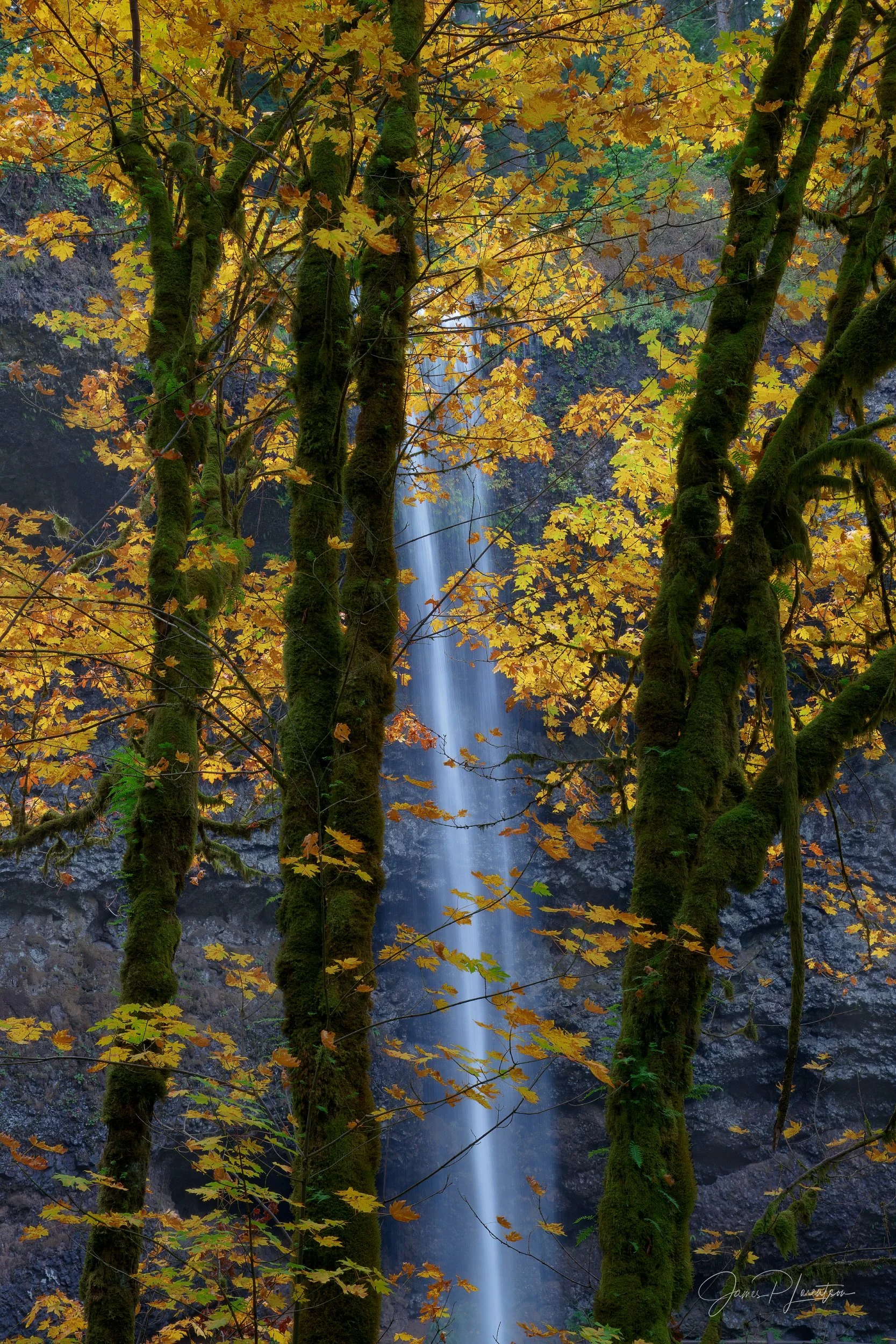
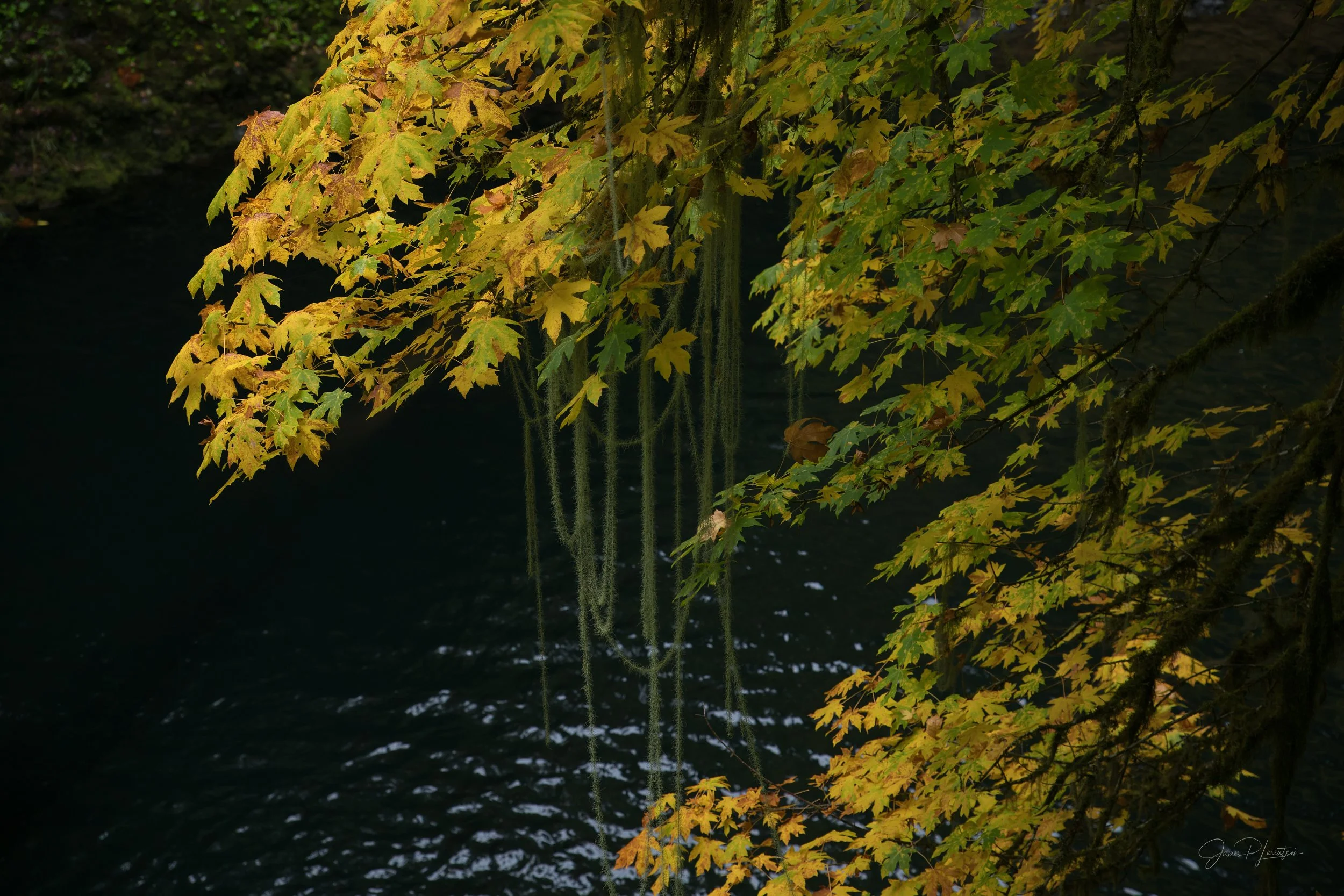
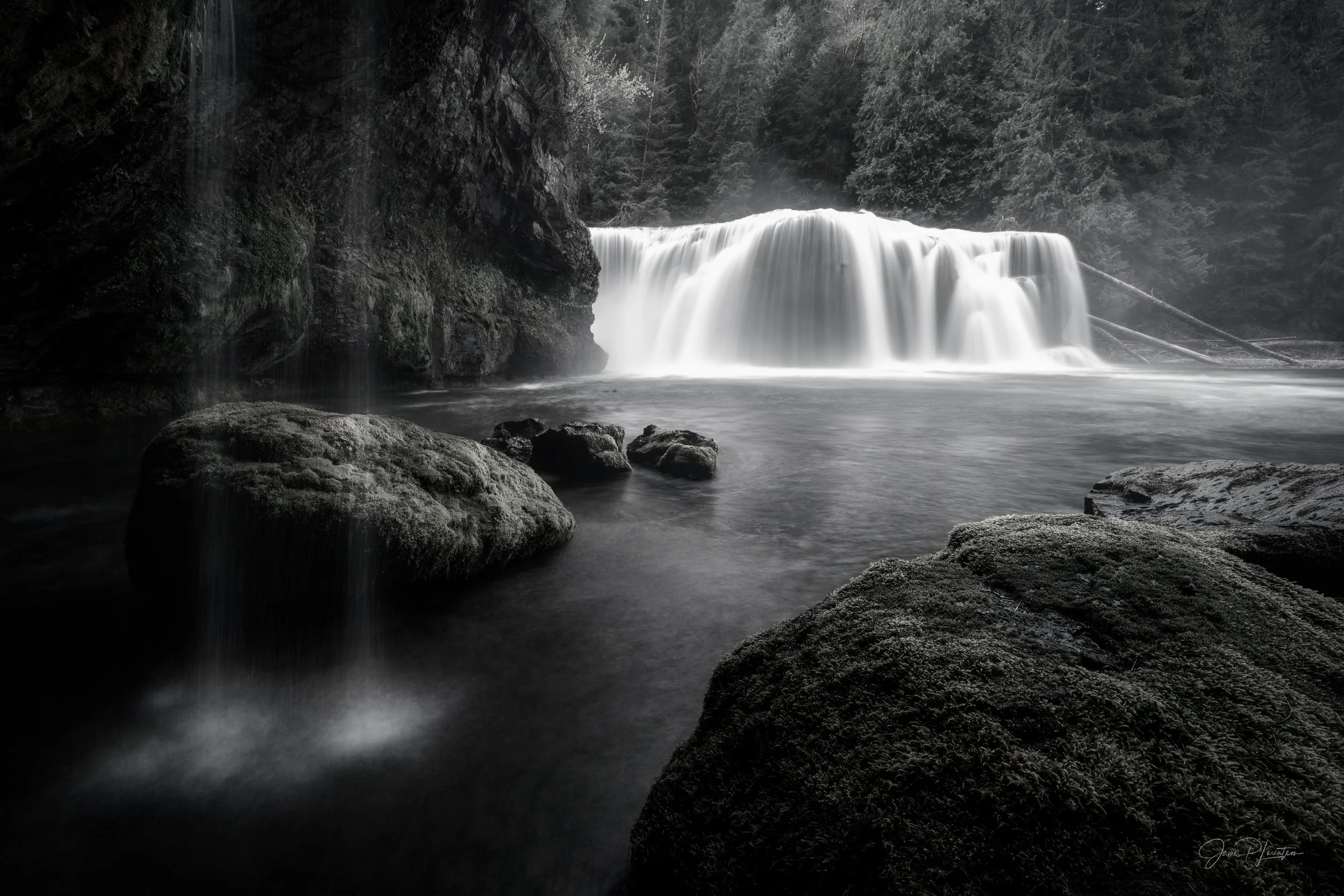
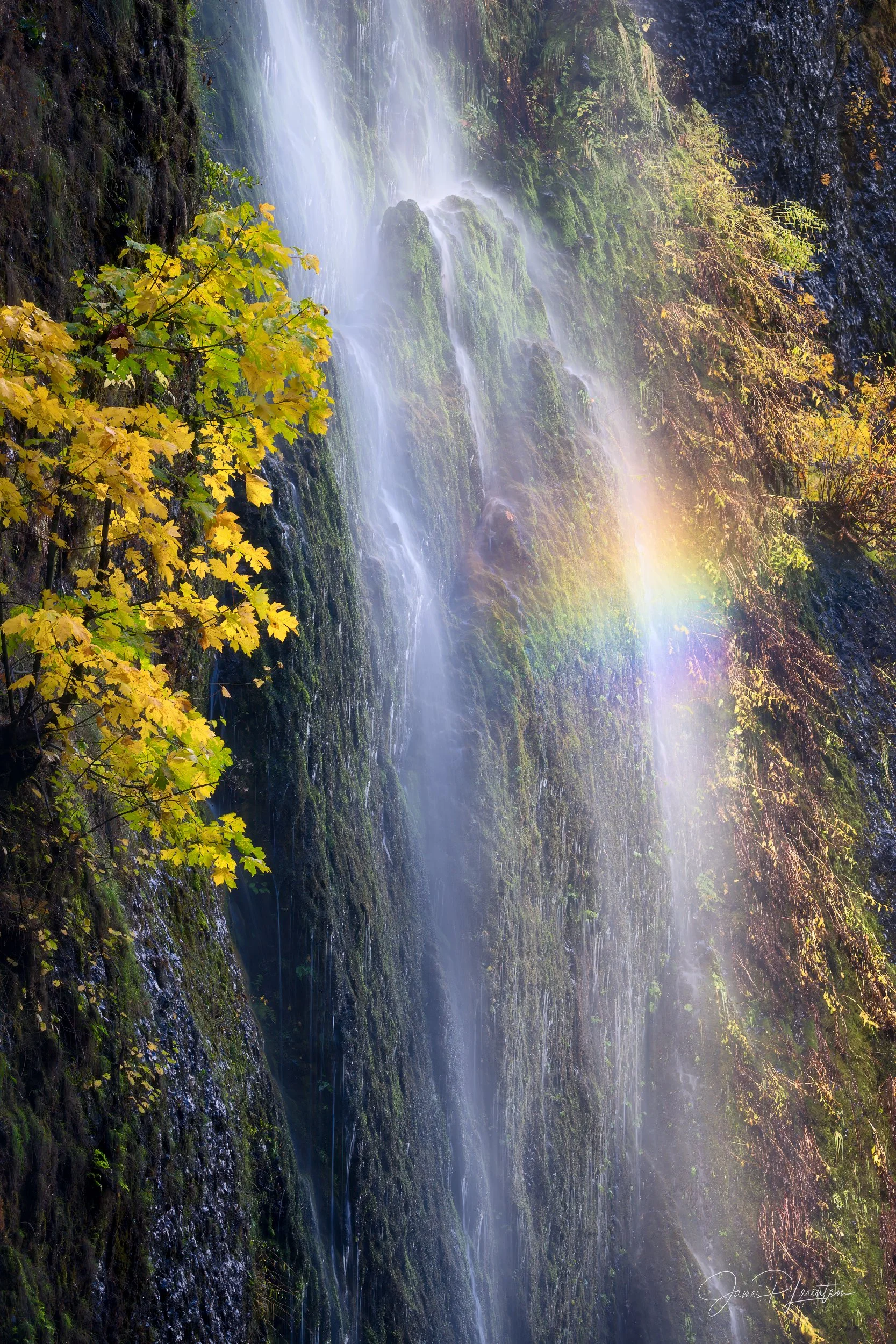
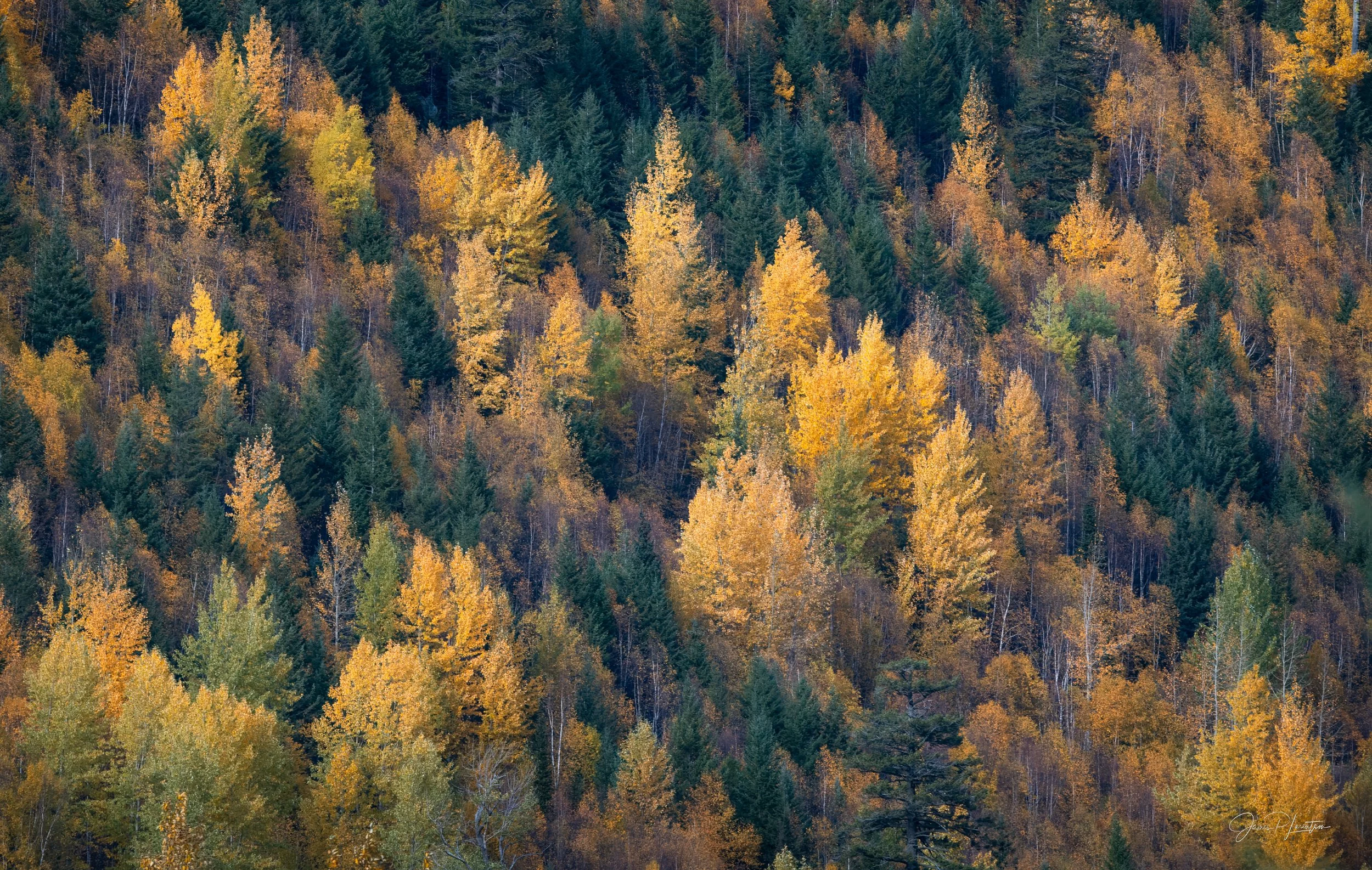
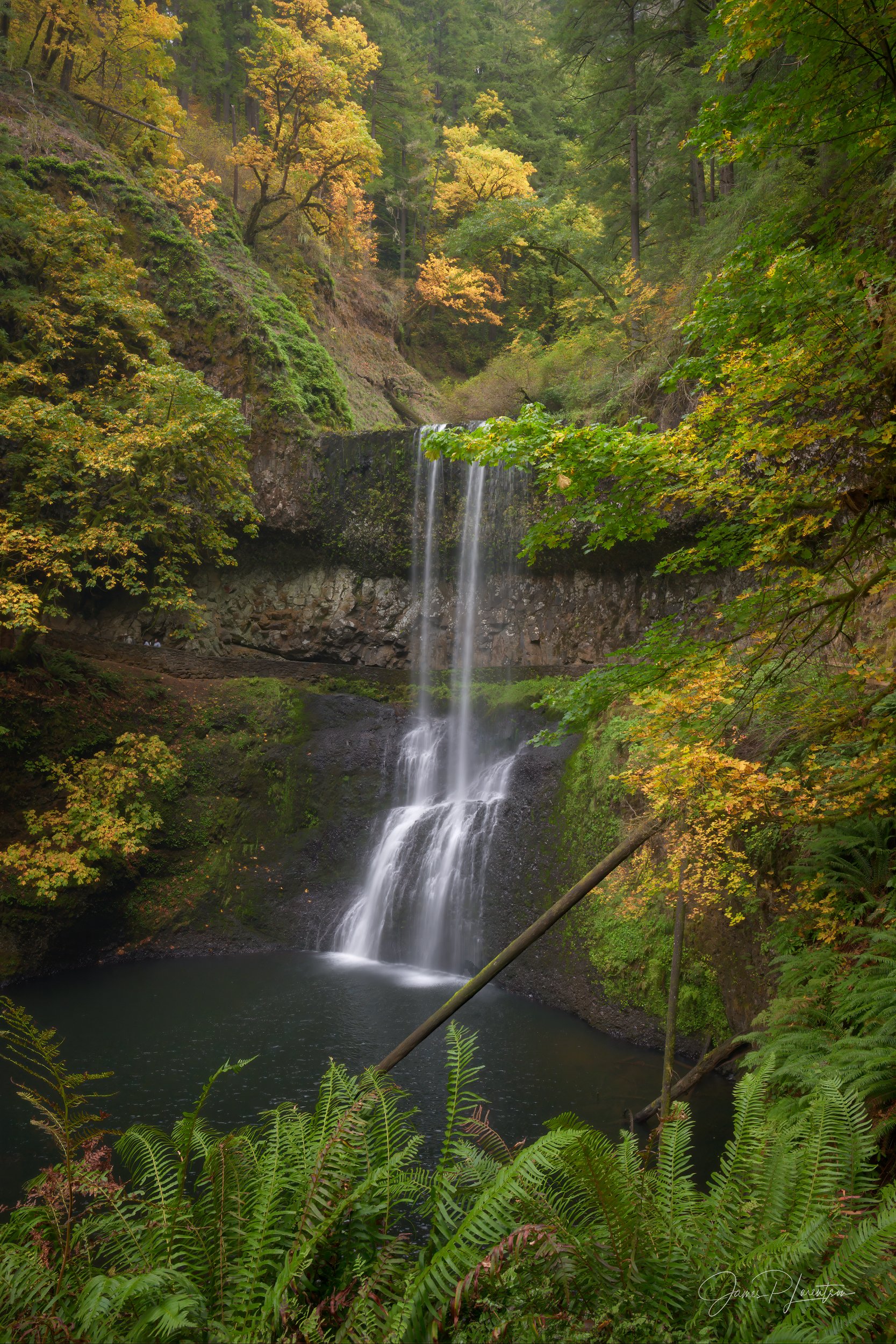
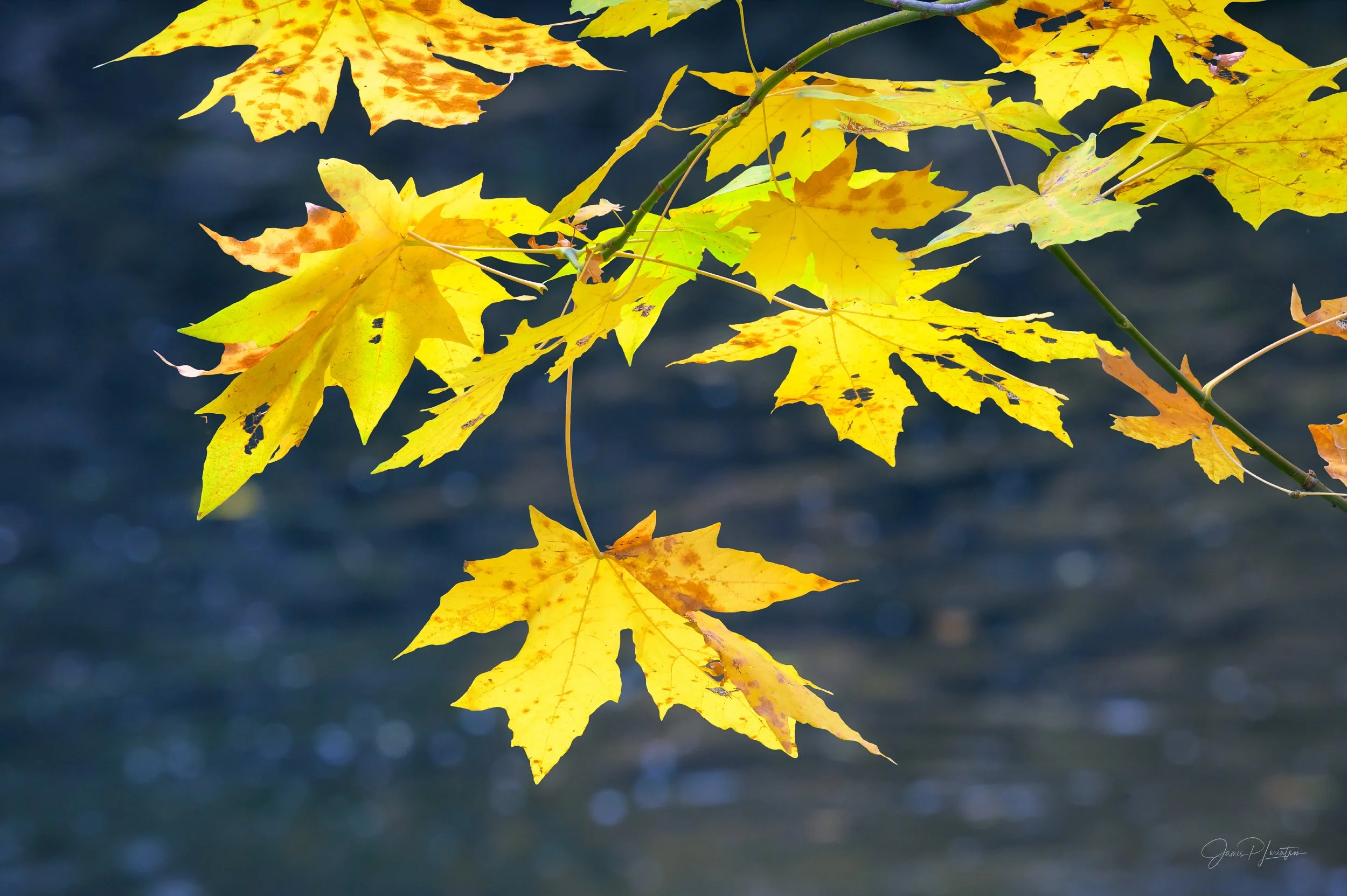
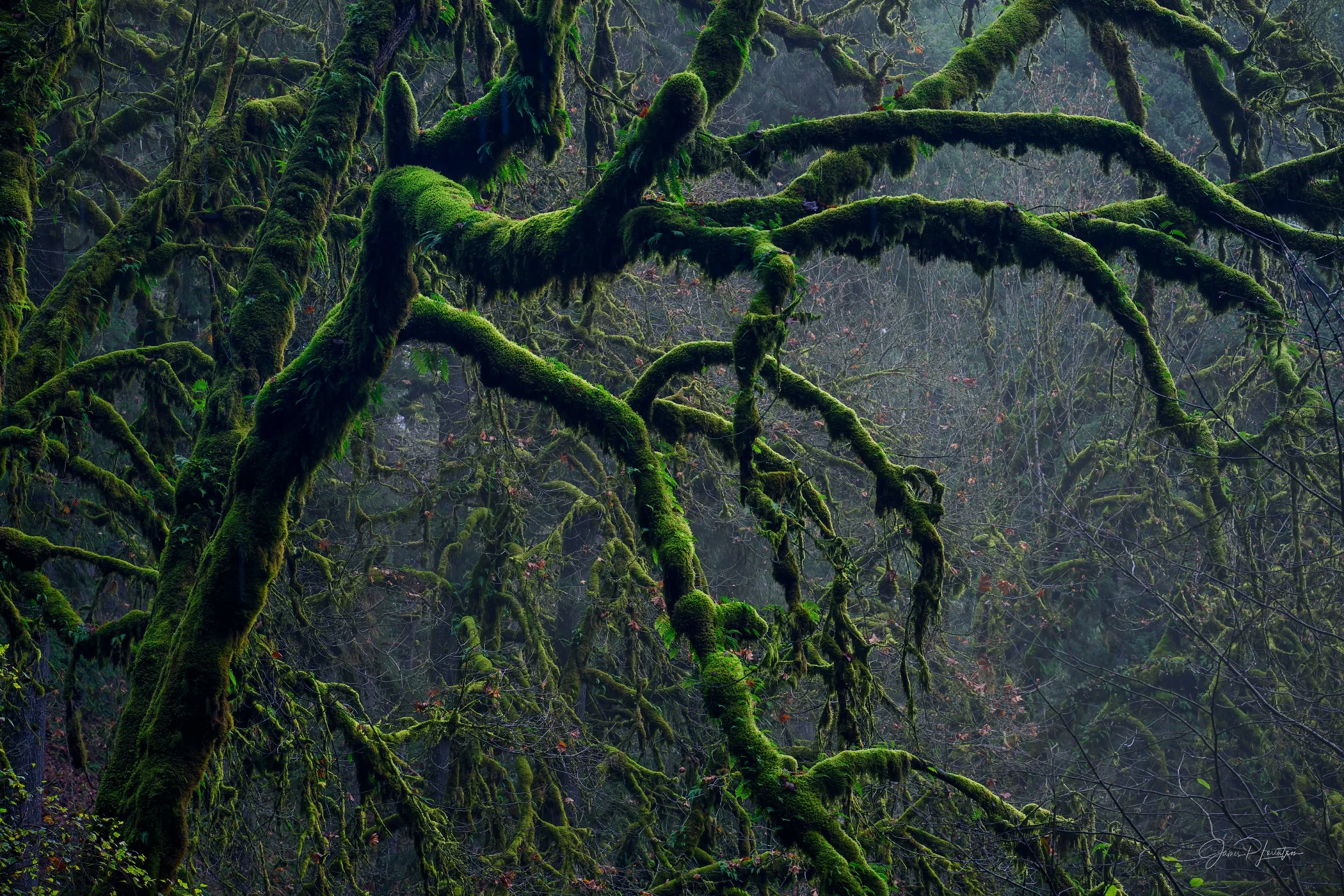
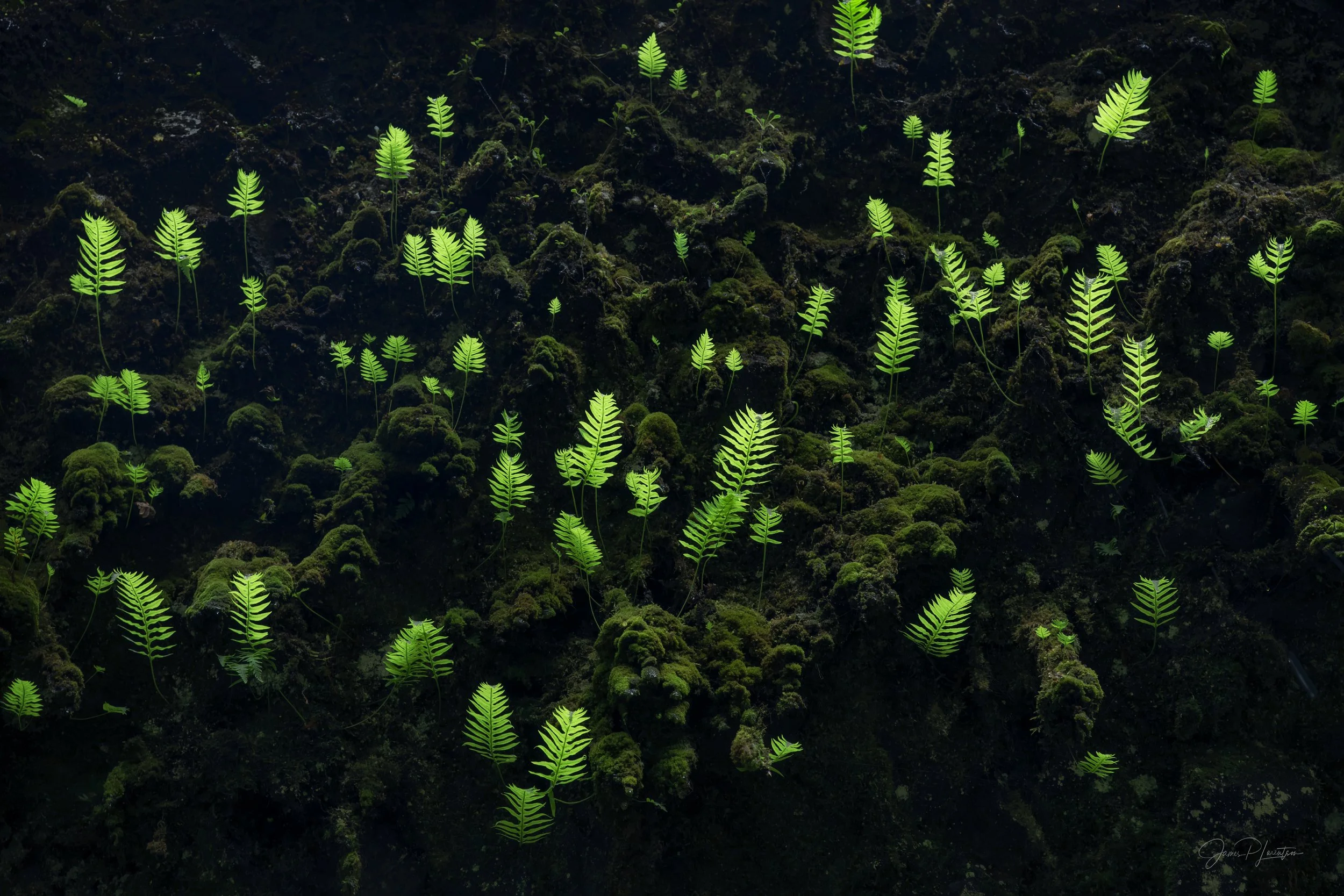
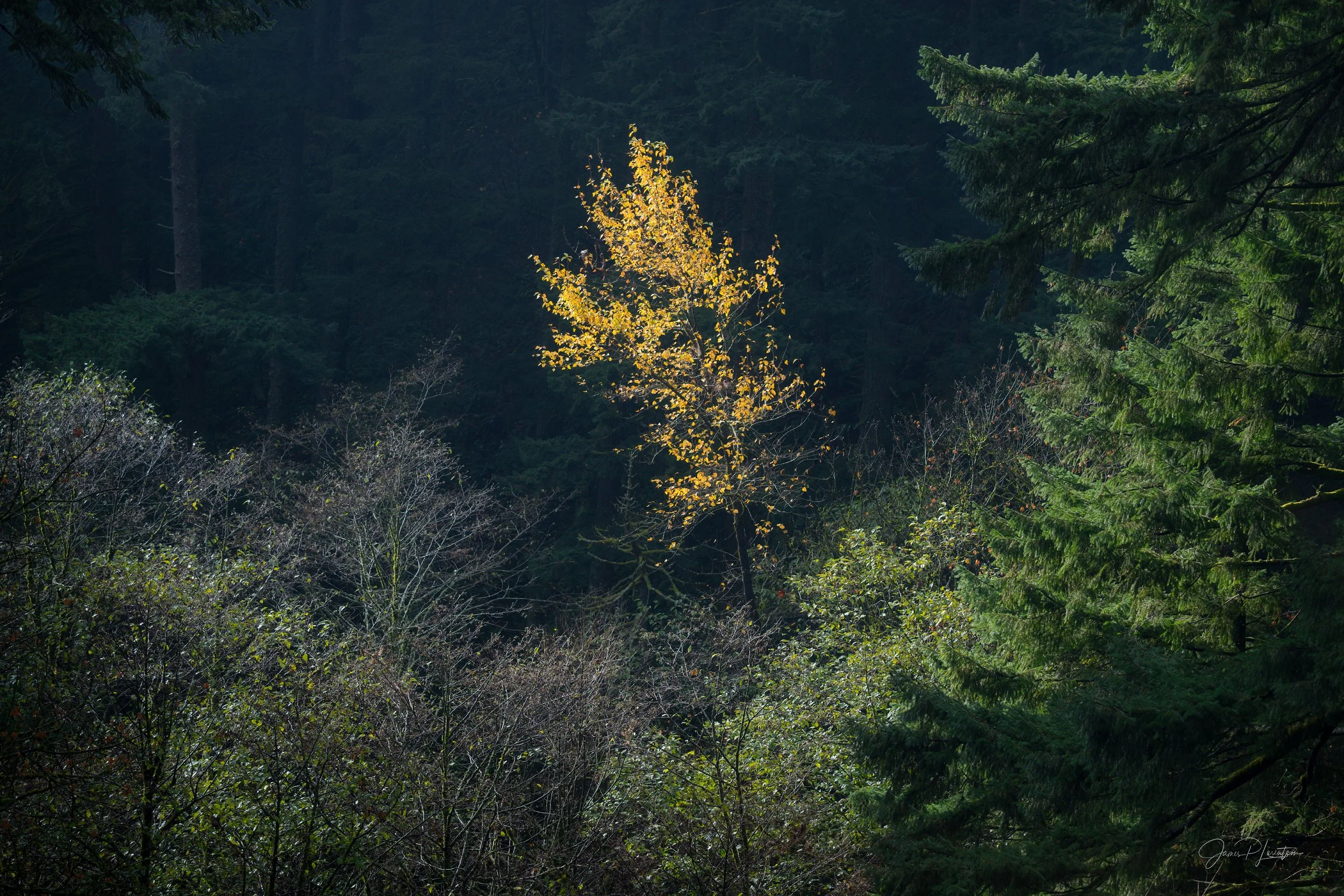
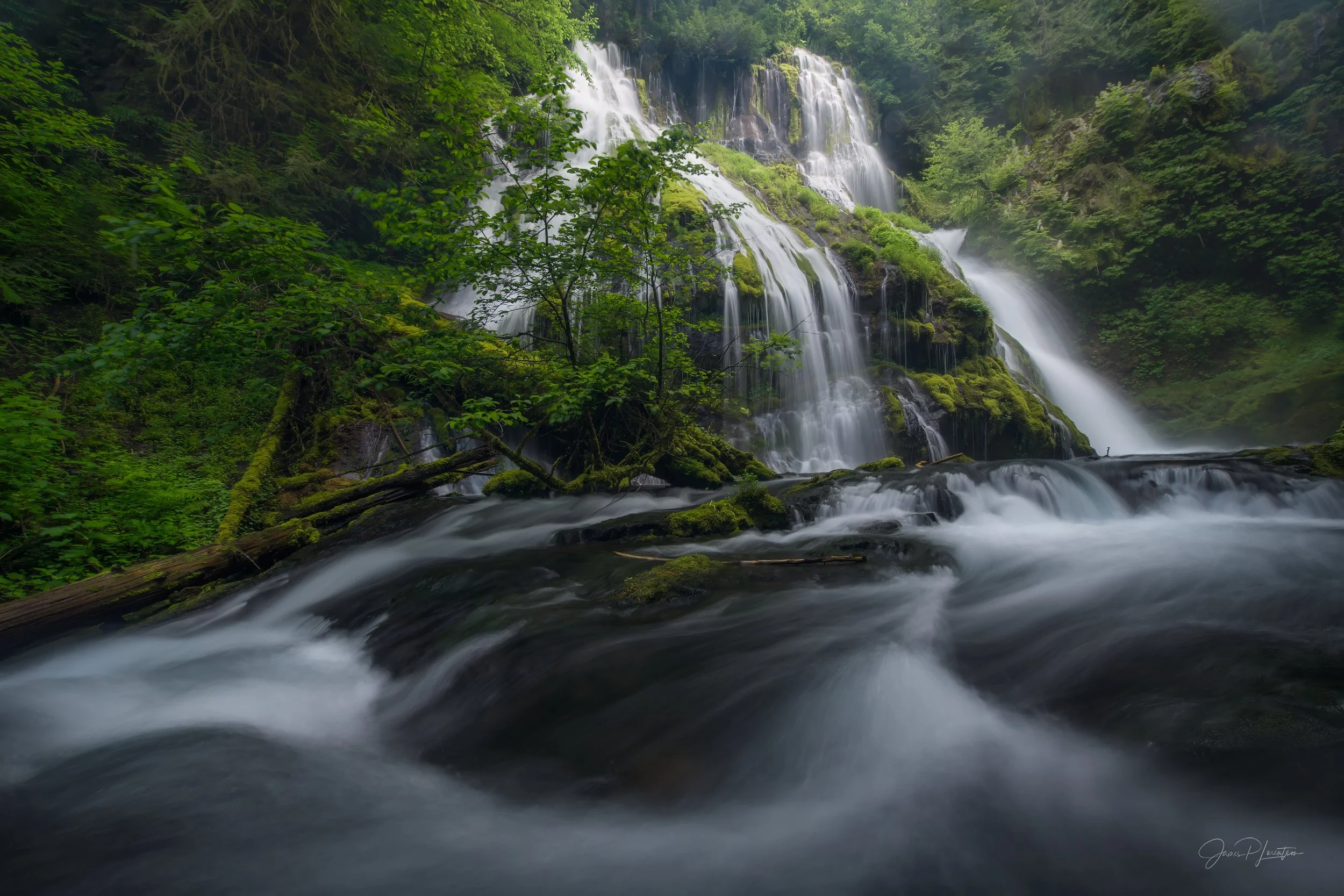
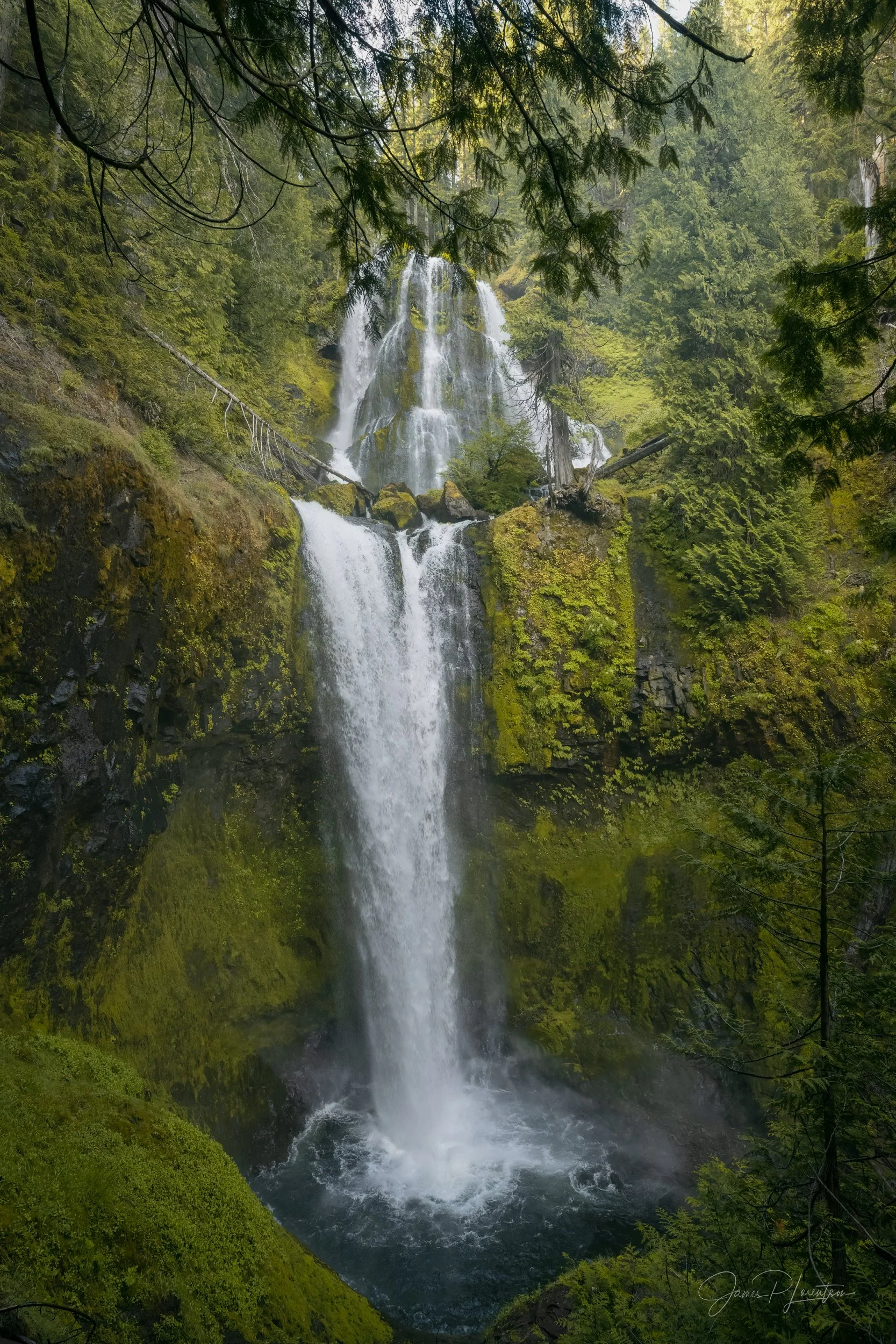
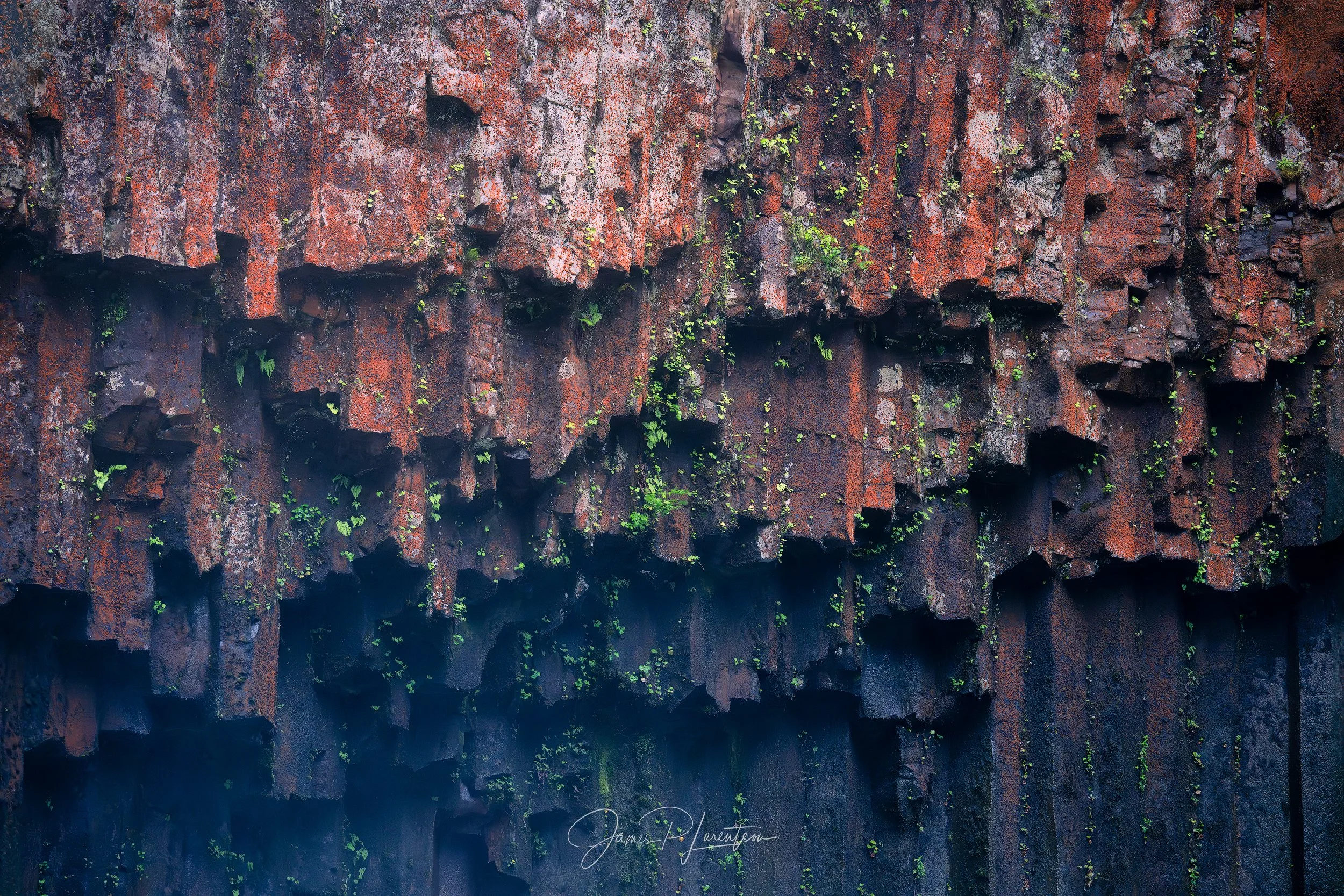
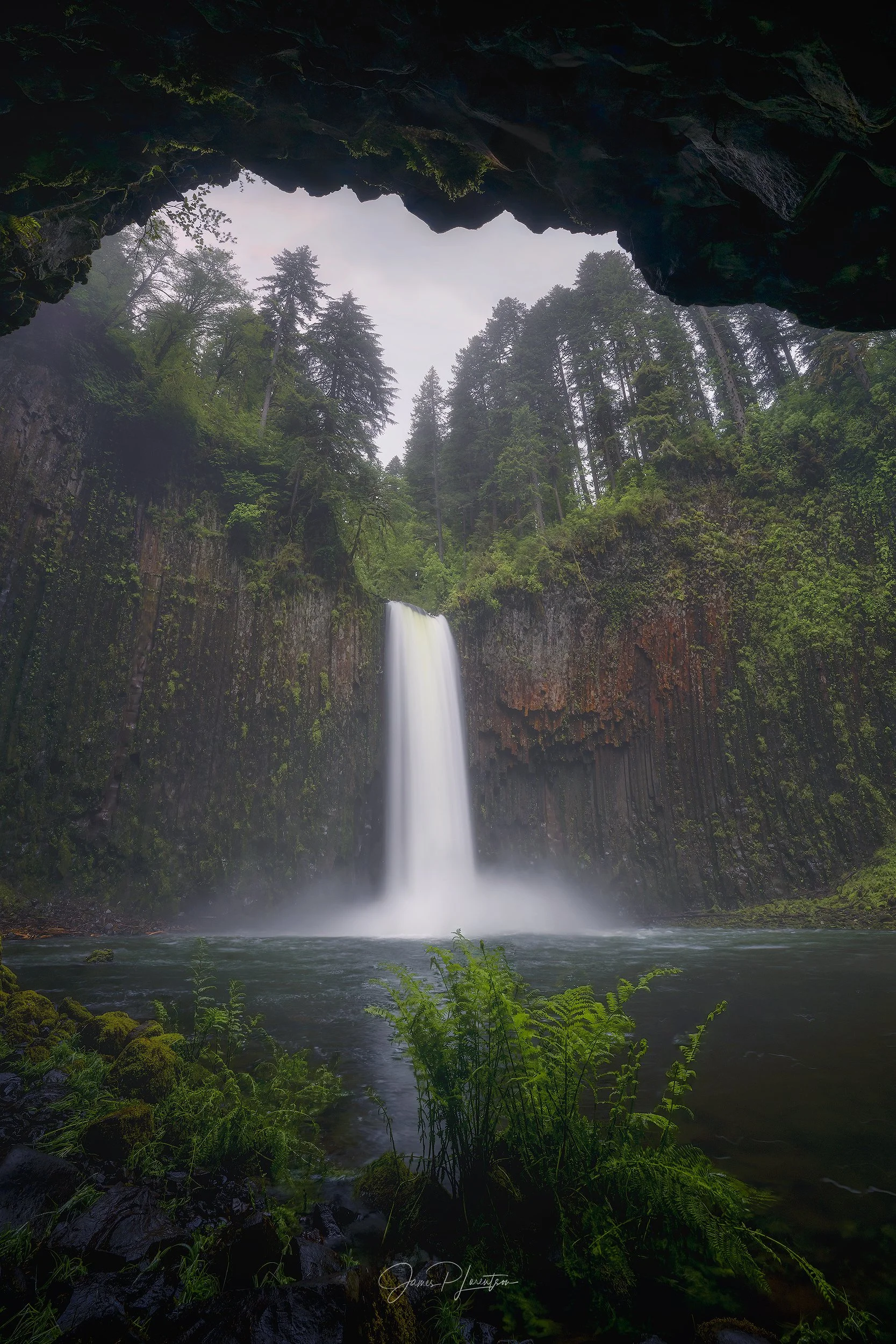
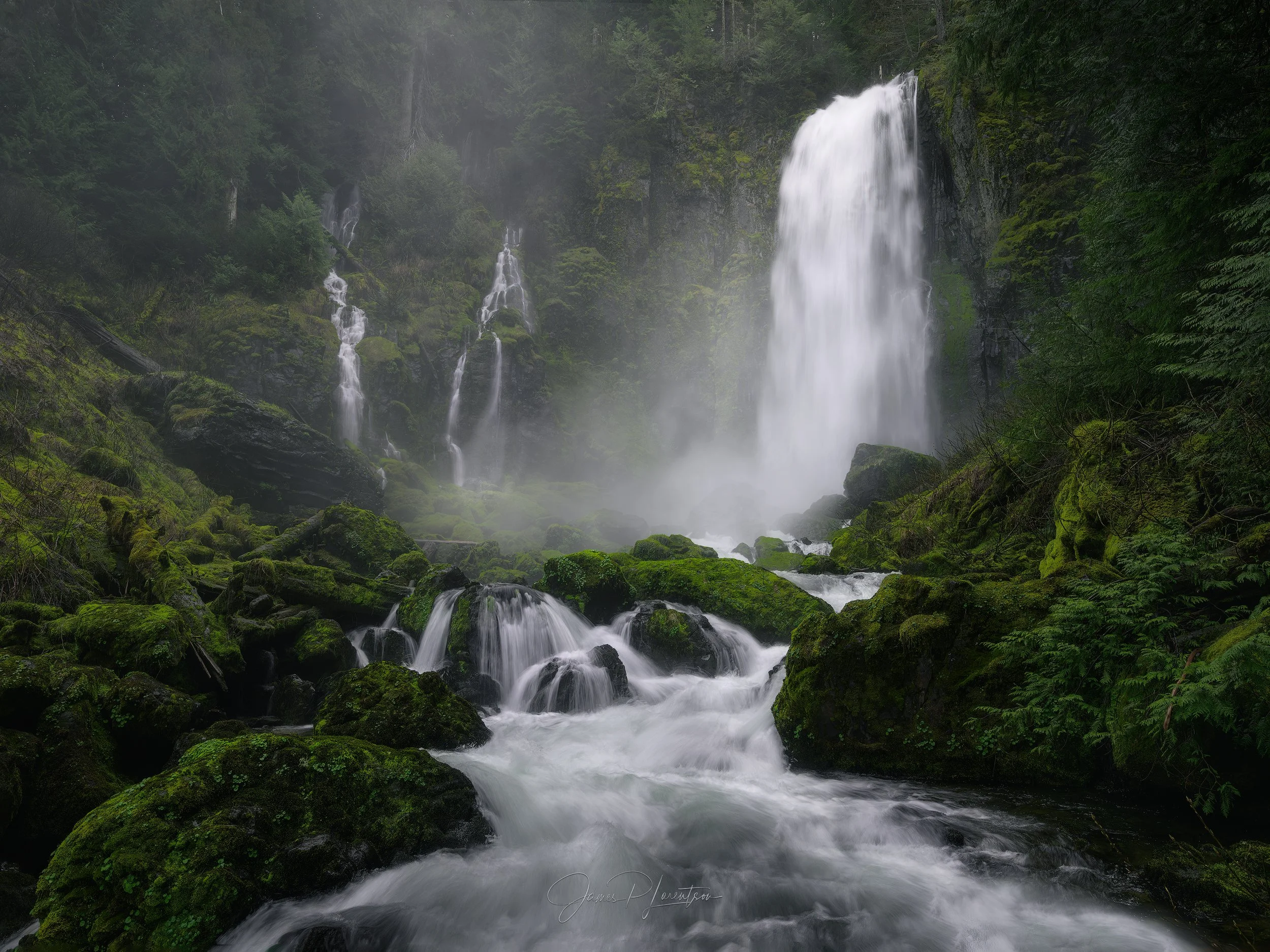
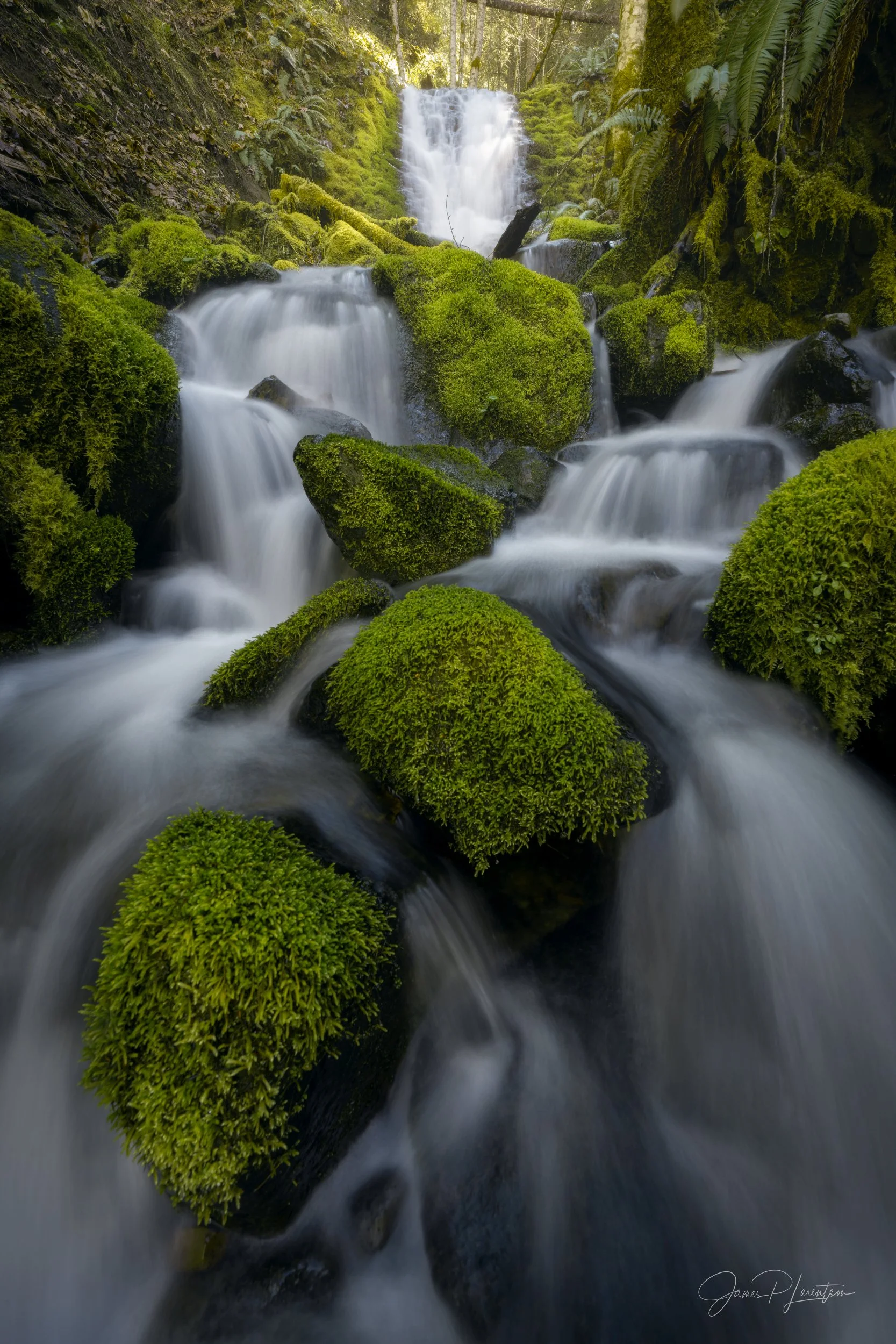
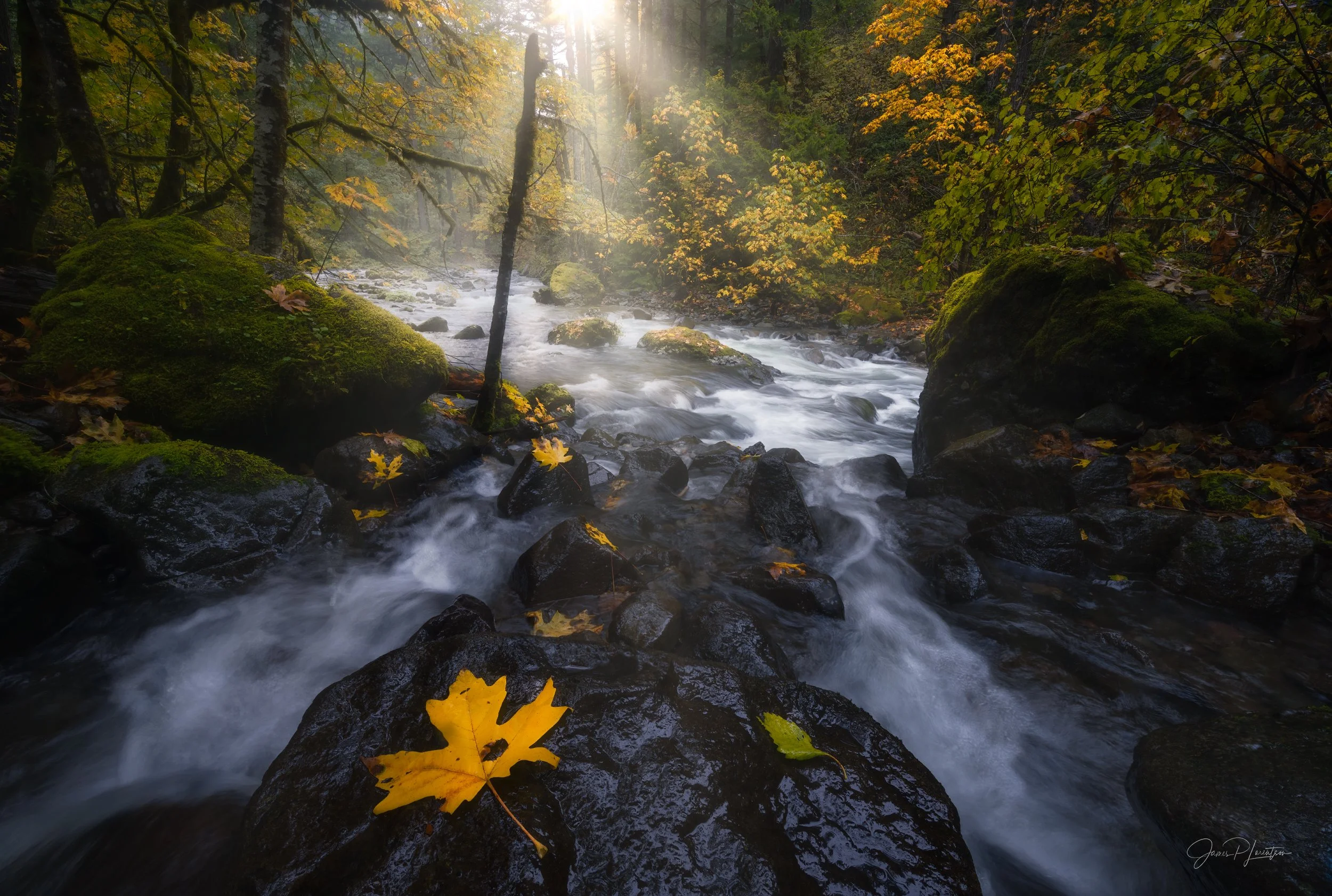
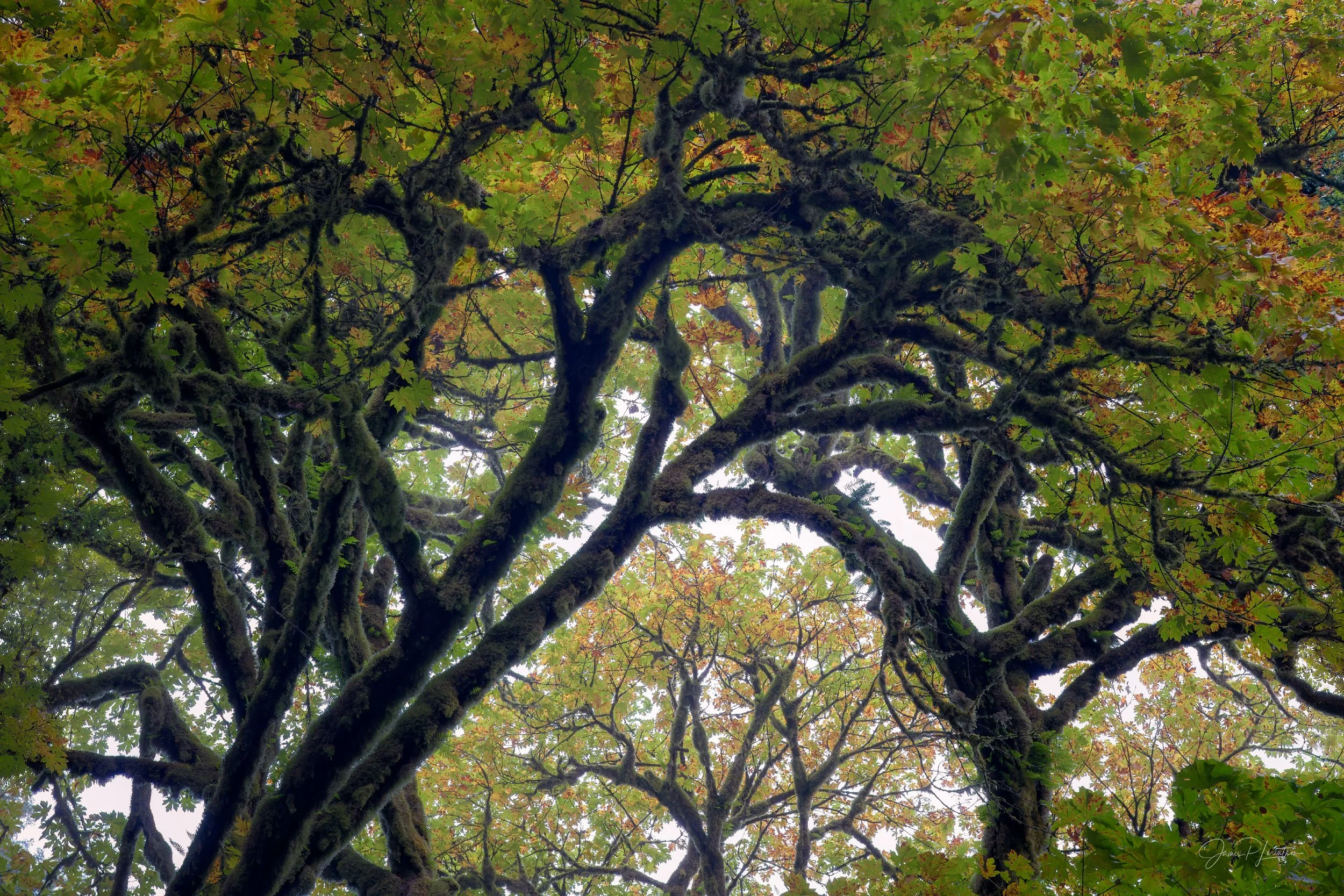
There is a two-week window each fall when the Pacific Northwest turns itself inside out. The first real rains return. Bigleaf maples ignite in gold against black basalt. Moss that spent all summer dormant goes electric green overnight. Fog hangs in the canyons until mid-morning, and waterfalls that ran quiet all summer begin to breathe again.
These waterfalls are the reason I live here. They pulled me across the country in 2015 — first to Seattle, and eventually, after years of chasing fog and flow through these canyons, to the Columbia River Gorge itself, where I've spent years learning where this landscape hides its best work. This workshop is me handing that over.
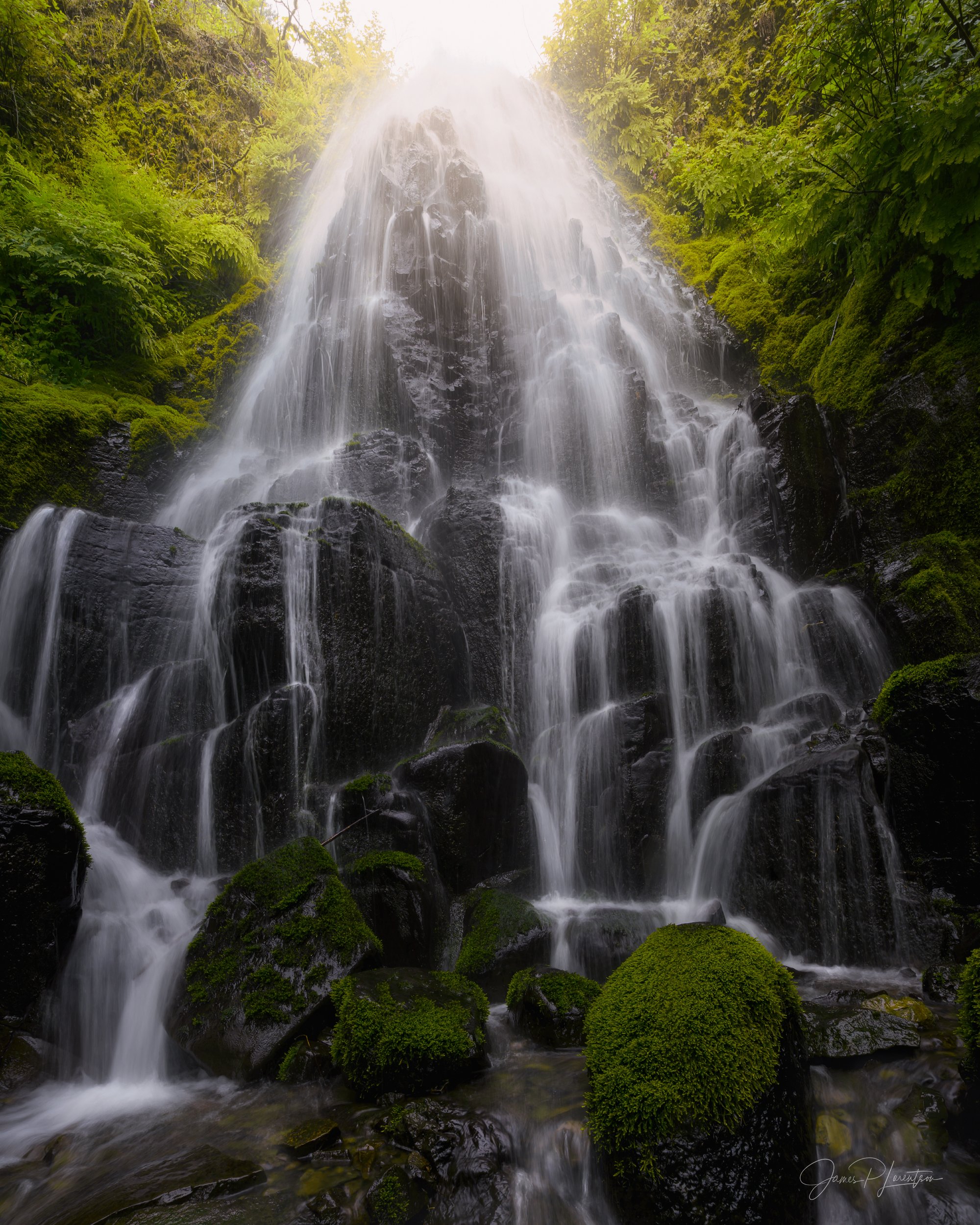
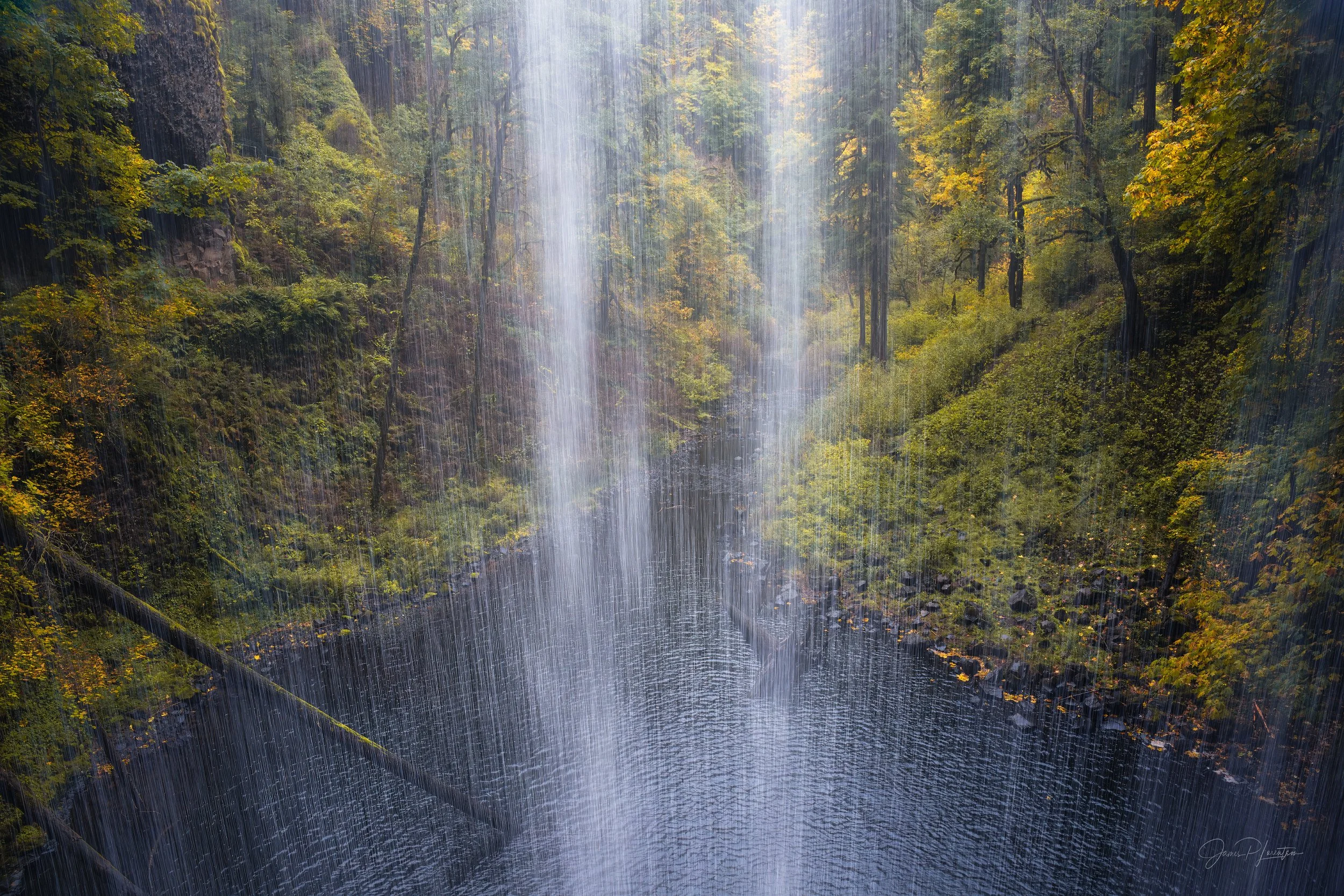
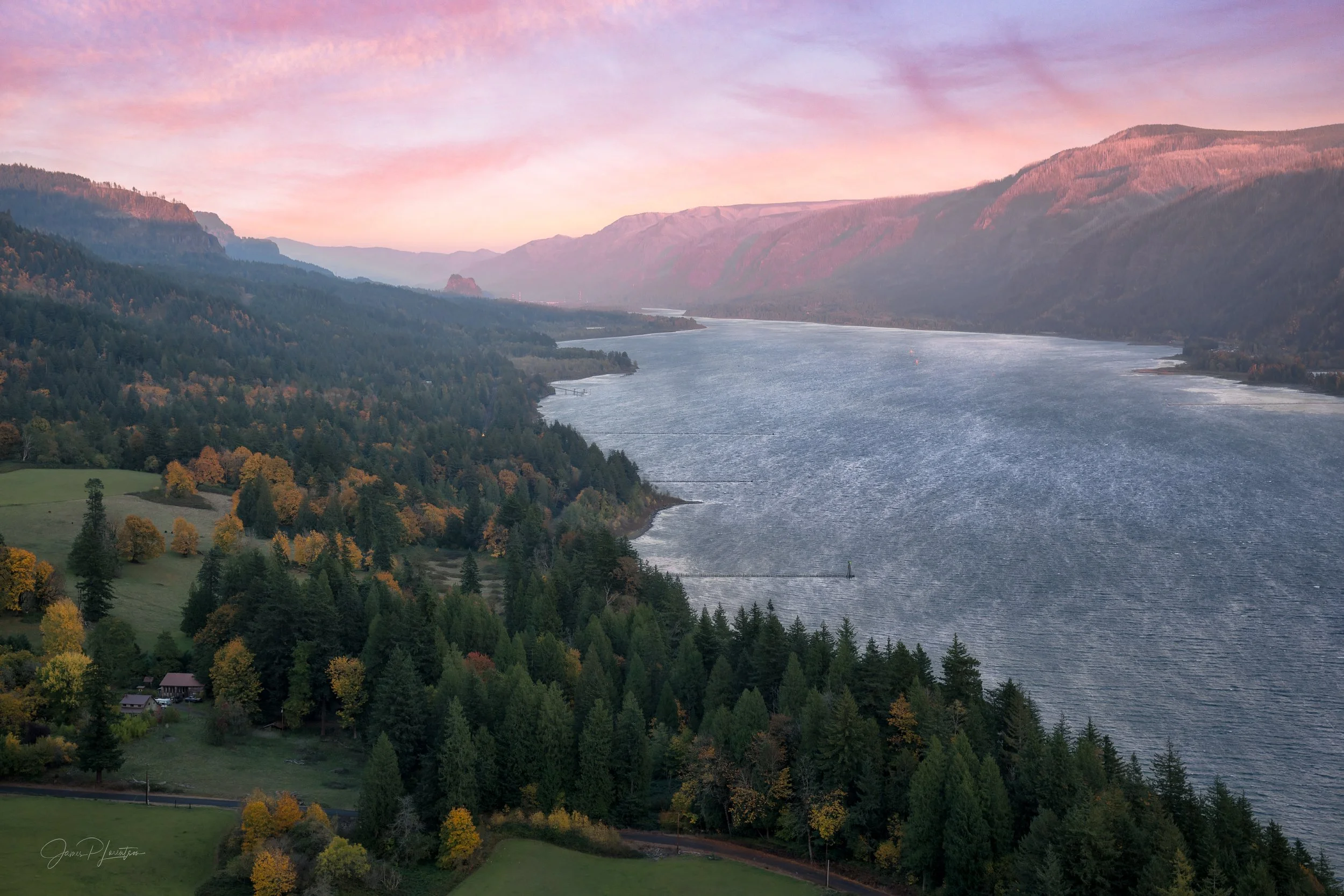
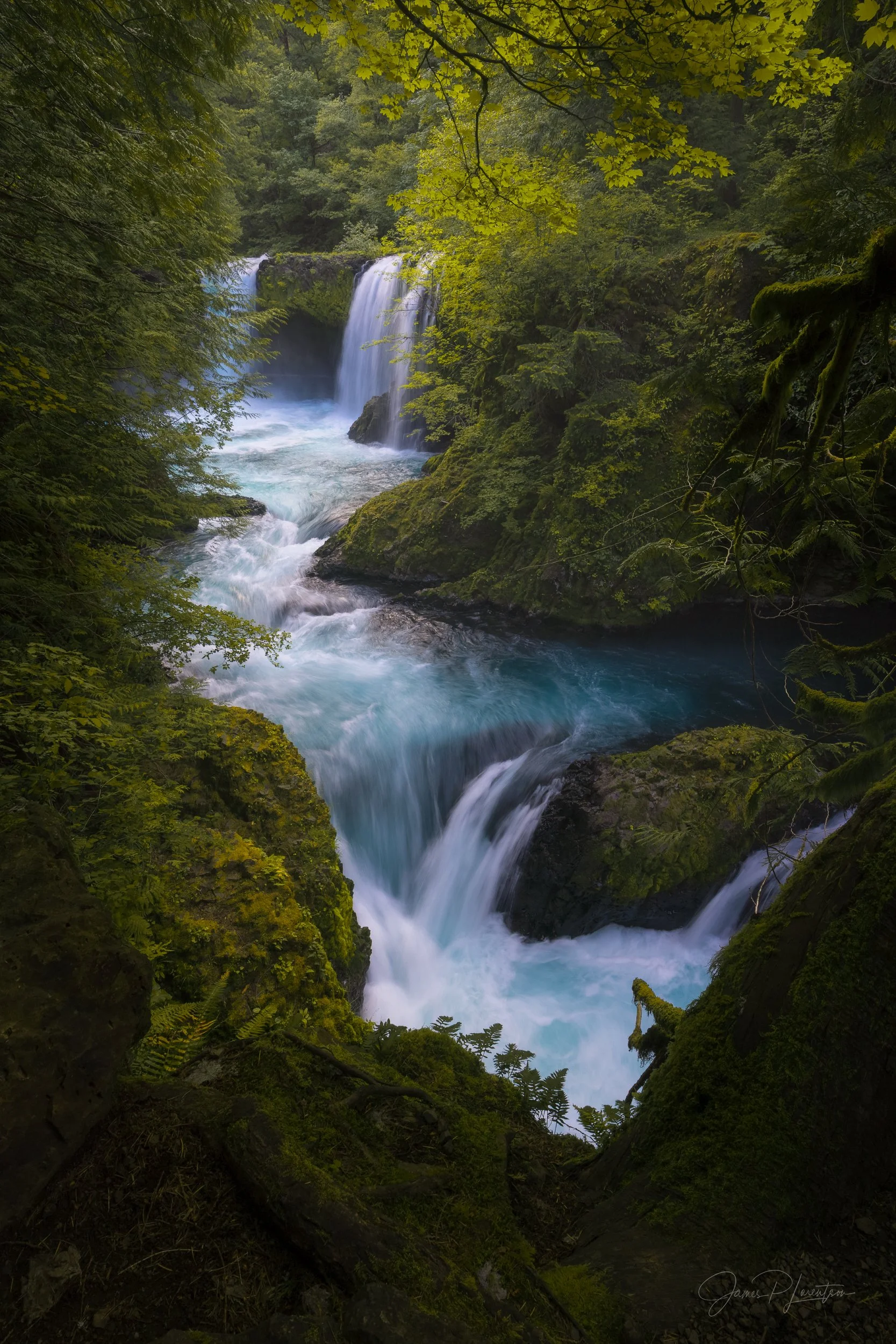
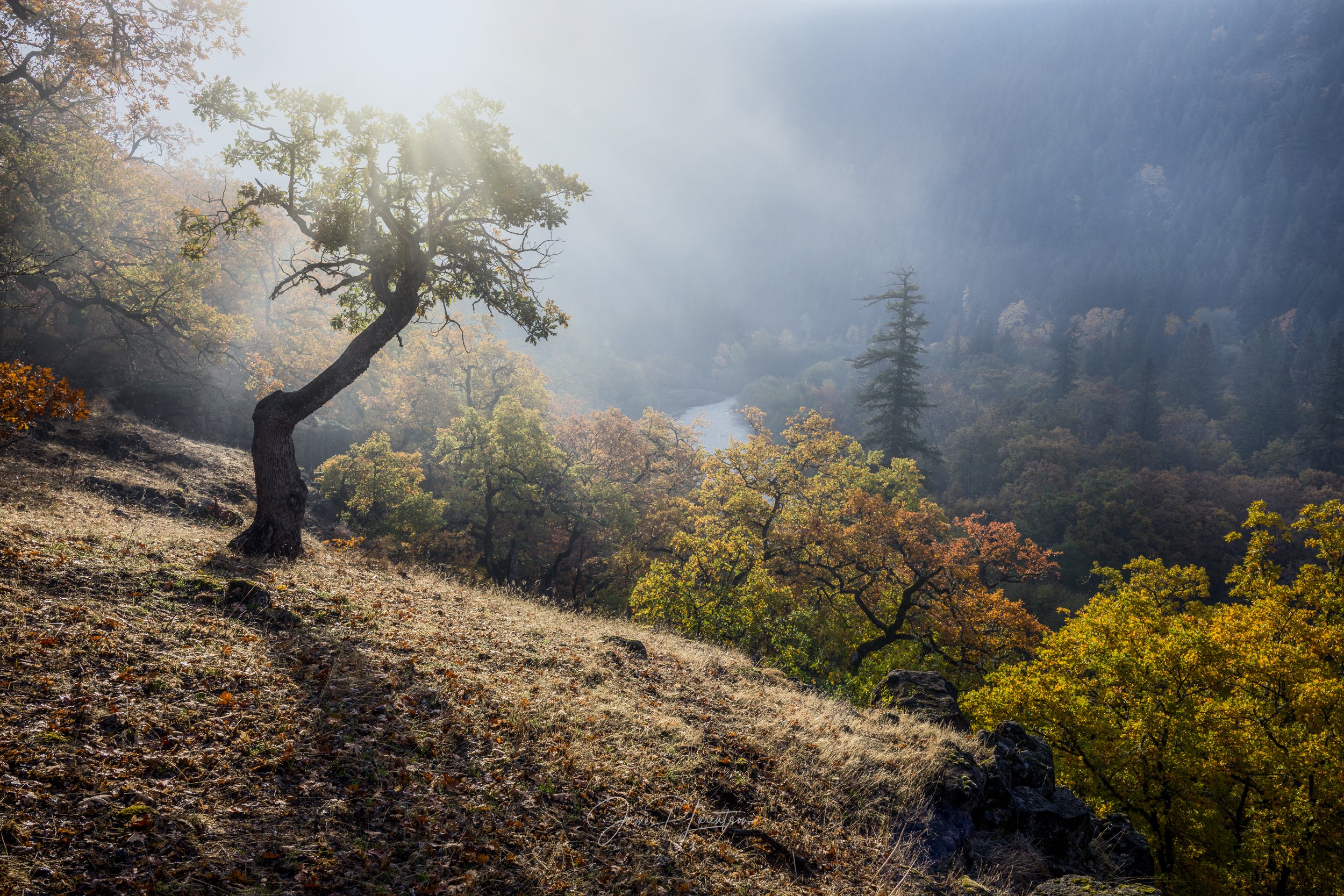
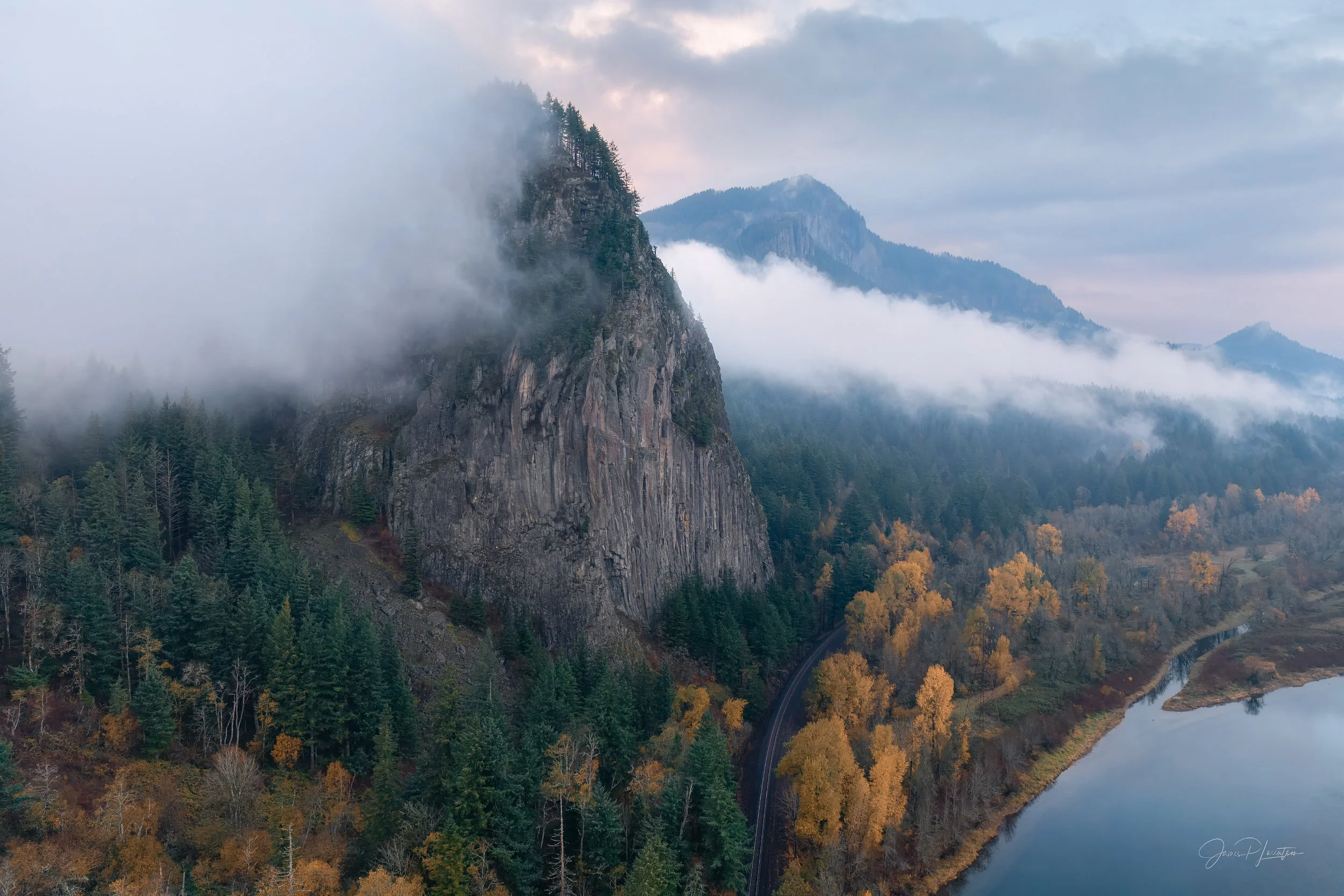
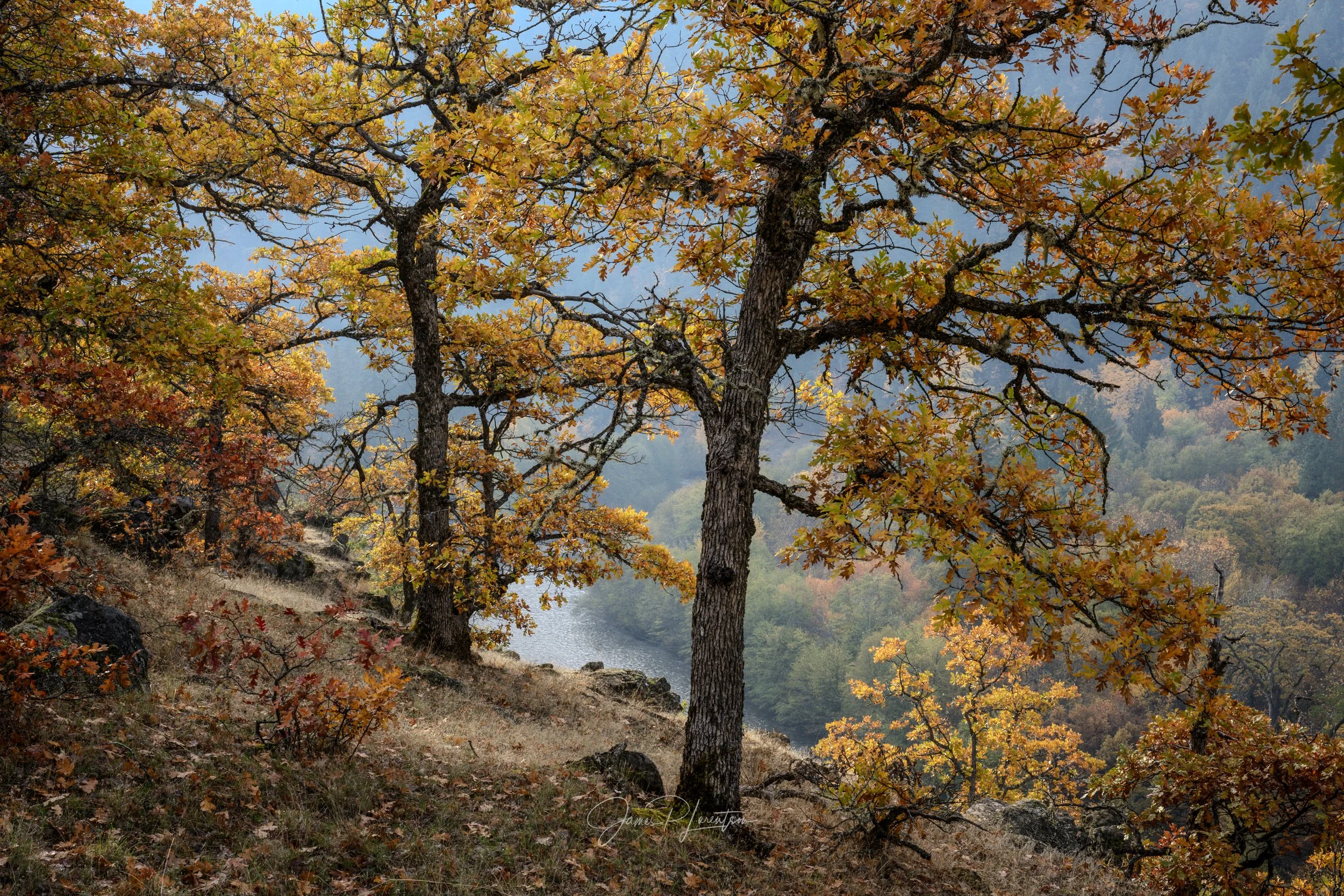
We start in the waterfall-carved canyon of Silver Falls State Park — a temperate rainforest amphitheater where autumn color wraps around ten waterfalls and the soft canyon light lets us shoot productively all day. Then we move north to the Columbia River Gorge for three and a half days of condition-driven shooting: waterfalls and mossy canyons on both the Oregon and Washington sides, sunrise and sunset vistas from Corbett to The Dalles, and — when conditions align — a corner of the eastern Gorge that almost nobody photographs, where oak woodlands and river canyons put on a fall show most workshop groups never see.
This is not a tripod-hole tour of postcard views. Autumn transforms these places — lower, more delicate flows reveal intimate compositions that are buried under spring torrents, exposed bedrock adds structure and texture, and fall color turns familiar scenes into entirely new ones. My job is to read the conditions each day — rain, flow, fog, color — and put you in front of the best version of this landscape that this particular week delivers.
And here's a bonus: late October sunrise is around 7:40 AM. You get golden hour, canyon mist, and moody light — without a single 4 AM alarm.
Fall Color + Waterfalls in the PNW
The Experience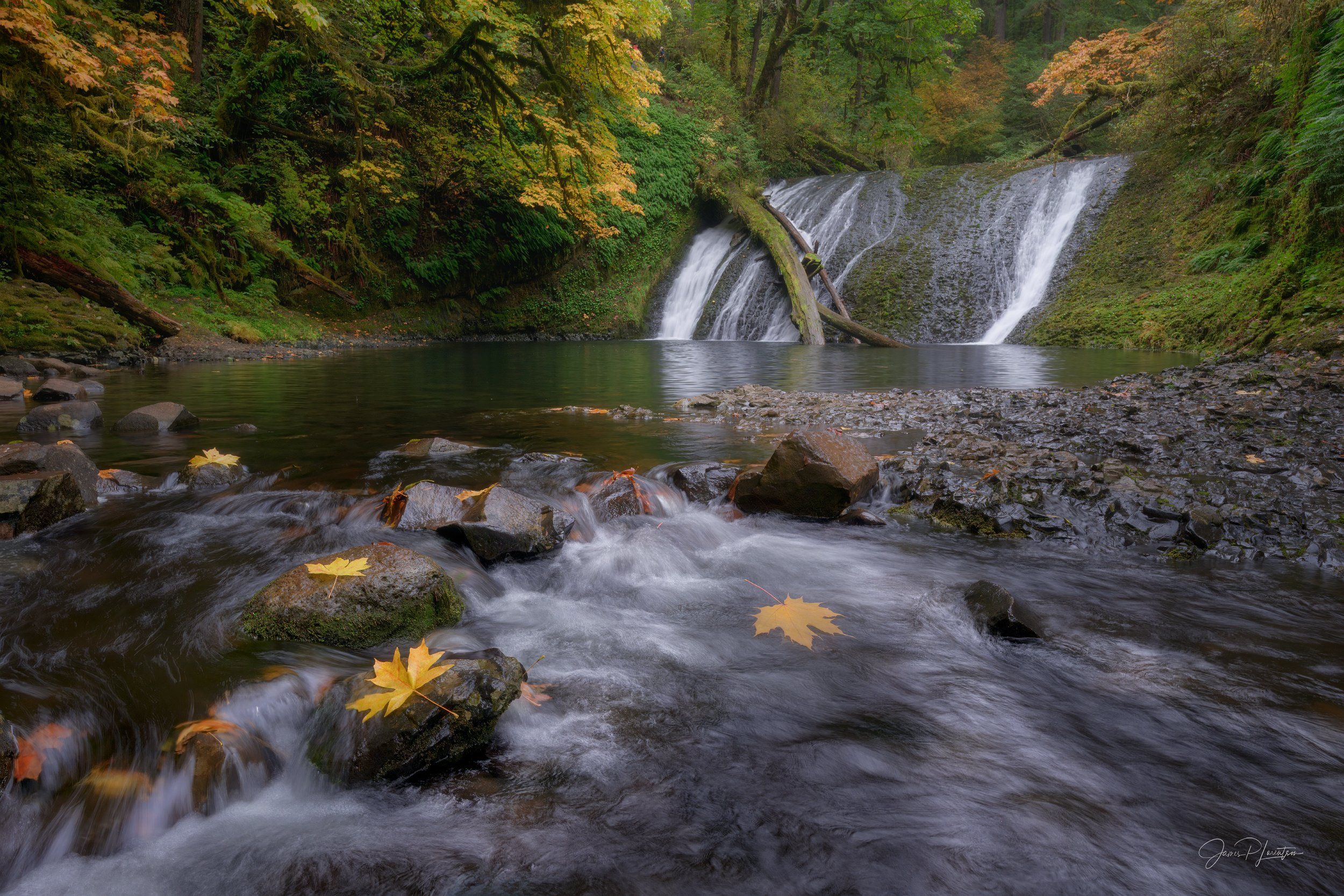

-

Tuition
$1,995 — founding rate
Tuition covers all field instruction, real-time condition-reading and decision-making instruction, and post-processing classroom sessions. Lodging, ground transportation, meals, and park day-use fees are not included.
A 30% deposit of $600 secures your spot, with the balance due by August 20, 2026 (60 days before the workshop). Registrations after August 20 are payable in full at booking.
-

Workshop dates
October 19 - 23, 2026
These dates target the convergence that makes PNW autumn special: peak bigleaf maple, vine maple, and oak color, the return of fall rains recharging waterfall flows, and the fog and mist that come with them. Running entirely on weekdays also means quieter trails and open parking at locations that are mobbed on fall weekends.
-

Group size
Limited to 6 participants.
I keep the group deliberately small so every participant gets substantial individual attention — real-time feedback on compositions, fieldcraft, and processing. Minimum enrollment is 4 participants; if the minimum isn't met by August 20, 2026, the workshop may be canceled with a full refund of all payments.
-

Travel & lodging
Fly to PDX
Portland International is under an hour from both Silverton (via I-5) and our Gorge base. Driving? Silverton is about 4.5 hours from Seattle and an easy reach from anywhere in the Willamette Valley.
Two bases, one simple move
This workshop uses two home bases, and it's worth saying plainly so you can book the right nights:
- Monday night: Silverton / Salem area (Silverton is the charming option; Salem has more choices)
- Tuesday, Wednesday, & Thursday nights: Cascade Locks — central to everything from the western waterfalls to the eastern oak country.Arriving from farther away? Book Sunday night in Silverton as well. A list of recommended lodging options at both bases will be sent upon registration.
-

Self-drive & carpooling logistics
This is a self-drive workshop — you're responsible for your own transportation. This keeps us fast and flexible when conditions call for a location change.
I highly encourage carpooling between participants. Gorge trailhead parking is limited, and consolidating into a few vehicles makes our logistics smoother, splits your gas costs, and is honestly one of the best ways to bond with the group between locations.
-

Photo gear
Required:
- Modern mirrorless / DSLR body
- Lenses covering wide to short telephoto (roughly 16–200mm)
- Circular polarizer — non-negotiable for waterfall and wet-foliage work; this filter will live on your lens all week
- Robust tripod & head
- Rain protection for your camera and plenty of lens cloths (spray and drizzle are part of the deal)Recommended:
- 3–6 stop ND filter for long-exposure water work
- Longer telephoto (300mm+) for compression and intimate forest scenes - Camera L-bracket
- Macro lens for detail work
- A small umbrella (surprisingly effective for shooting in rain)For you: waterproof hiking boots with good tread, full rain gear, and layers. If it's raining, we're shooting — rain is when this landscape performs.
-

Fitness level
Easy to moderate
Expect daily hiking totals of roughly 2–4 miles on forest trails that will be wet, muddy, and rocky, with some stairs and moderate elevation change — including sections of Silver Falls' canyon trail and Gorge trails like Wahclella and Latourell. Pace is unhurried (we're stopping to shoot constantly), but you must be sure-footed on slick surfaces, comfortable carrying your own gear, and able to navigate natural terrain in low light. Several locations also offer near-roadside access, so there's flexibility on lower-energy days.
-

Photography experience
Intermediate to advanced
You need a solid understanding of exposure and how to operate your camera. Newer shooters are welcome if they have the proper equipment and know how to use it. We focus our time on advanced fieldcraft, composition theory, finding unique vantage points, and sophisticated post-processing techniques.
-

Creative focus
Waterfalls, fall color, Gorge vistas & forest atmosphere
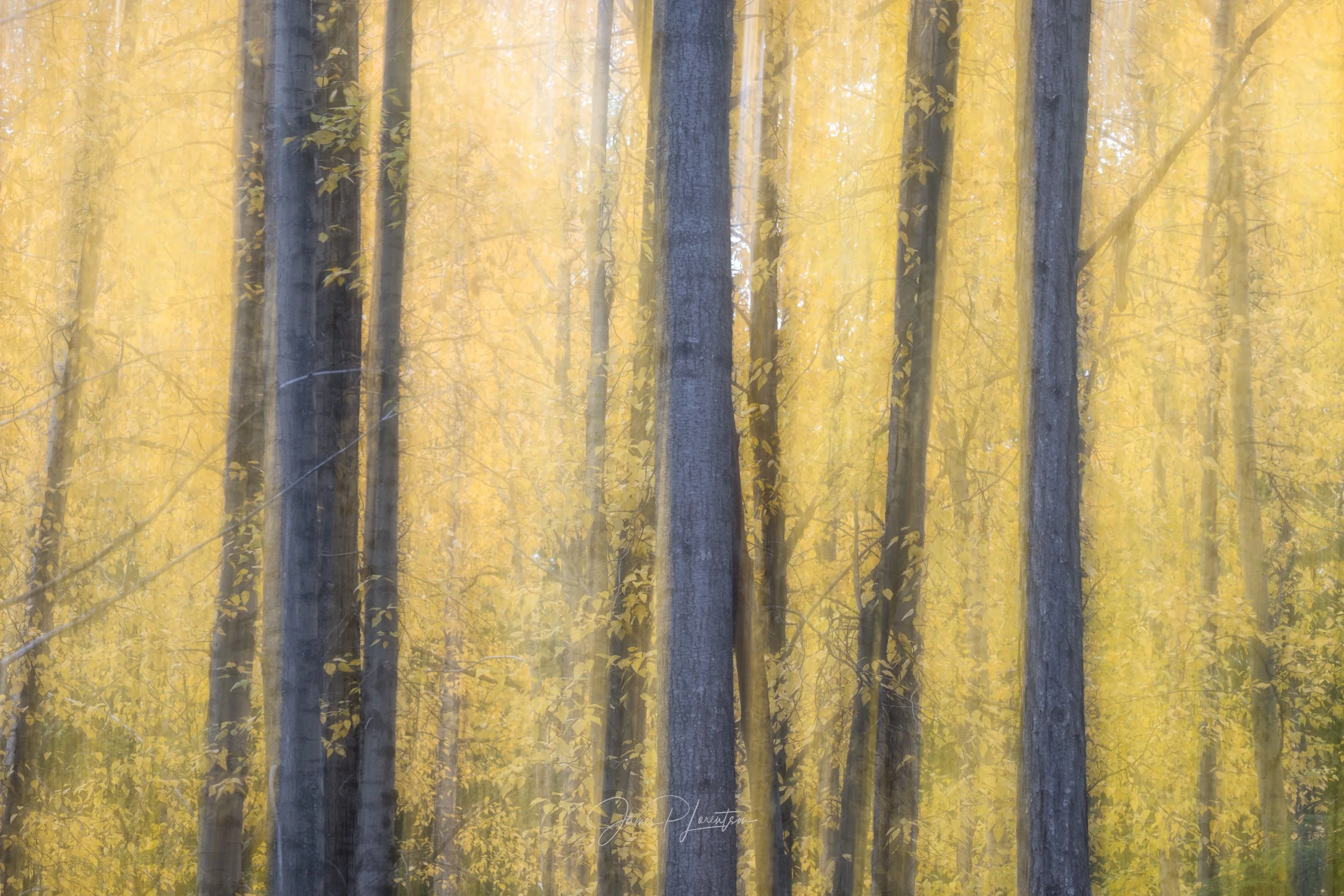
We'll balance the classic grand scenes — waterfalls in full color, sunrise and sunset from the Gorge's great vista points — with the work I love most: intimate forest scenes, mossy details, oak woodlands, fog and mist, autumn abstracts, and experimental techniques like Intentional Camera Movement (ICM). You'll learn to shoot with the final edit in mind — capturing the frames needed for focus stacks, exposure blends, and long-exposure composites — and then we'll build them together in the digital darkroom.
How this workshop will run
This is not a static tour where we simply drive from one spot to the next. We keep our itinerary completely flexible to work with the changing weather and light. Here is what you can expect:
Right place, right time: I handle the logistics. Using advanced weather and atmospheric tracking (Fog-Index) and years of scouting, I aim to put you in front of peak conditions so you can just focus on shooting.
Seeing through my eyes: I don't just point at the scenery. I take you to my absolute favorite spots and narrate my thought process in real time.
Building camaraderie: Photography doesn't have to be a solo pursuit. This trip is about the memories, the shared awe, and making new friends. We laugh, we learn, and we share the freedom of being out in the wild together.
Portfolio building: Taking the photo is only half the process. I teach you how to gather the right field data (focus stacks, panoramas, exposure blends) and bring them to life in our dedicated post-processing sessions, ensuring you leave with images you are genuinely proud of.
If you want to experience the PNW's waterfalls at their most atmospheric, build genuine fieldcraft, and take your photography to a new level, I'd love to have you out there with me.

What to expectChasing the Conditions, Responding to the Light
Because the best photography happens at the edges of weather, our itinerary is intentionally flexible. We adapt daily based on rain, flow, fog, and color. In general, here's how the five days unfold:
Monday: Silver Falls
We meet around midday in Silverton for introductions and a workshop orientation over lunch (exact time and location sent to participants). From there we head into Silver Falls State Park for an afternoon and evening field session among the canyon's waterfalls and fall color. Overcast? Even better — soft light and wet foliage are exactly what this forest wants.
Tuesday morning: Silver Falls, then north to the Gorge
We spend the morning working Silver Falls' canyon — the diffused forest light here stays shootable well past sunrise, so we'll take our time with compositions, polarizer technique, and long-exposure work. Midday, we make the roughly two-hour drive north to Cascade Locks, our base for the rest of the week, check in, and head out for our first Gorge evening session.
Tuesday - Thursday: The Gorge, and more!
These days are deliberately unscripted, because in late October the Gorge doesn't follow a script. Each morning and evening, we go where the conditions point us — and you'll watch exactly how I make those calls. Our hunting grounds: waterfalls and mossy canyons on the Oregon side, the quieter falls and forests of the Washington side, sunrise and sunset vista points stretching from Corbett to The Dalles, and the oak country of Klickitat County when the eastern light and color align. The general rhythm:
When skies promise drama, we're up before dawn positioning for sunrise at a Gorge vista, hunting fog in the river valley below. When it's overcast, we sleep a little longer and head straight into the canyons — soft light is waterfall light.
MorningsWhen the light goes flat or harsh, we retreat and recharge. On certain days we'll use this window for Lightroom and Photoshop processing sessions and group critiques at our Cascade Locks base, building your images from the week while they're fresh.
Mid-DayClearing storms and dramatic skies send us to a sunset vista. Steady overcast keeps us in the forest chasing color and falls until the light dies. And when conditions are truly uncooperative, that's our cue to slow down and explore abstracts, intimate scenes, and ICM — some of the most creatively rewarding work of the week.
Evenings & NightsFriday: Final session and wrap
One last morning field session at a location chosen by that morning's conditions. We wrap midday with a final classroom session including one-on-one time — you choose what we cover: image reviews, processing, printing questions, or field technique. We end by 2 PM, giving you time to travel home in daylight.
From Serious Hobbyists to Pros.
Workshop FITThis Workshop Is For
Photographers who want to understand the “why” behind an image, not just the “where.”

Creatives interested in expanding their vision into abstracts, intimate landscapes, and macro, rather than just shooting iconic vistas.
Those who want to master the entire pipeline, from capturing complex field data (brackets, stacks) to blending it seamlessly in post-processing.
This Workshop Is Not For
Photographers looking for a passive "tour guide" to just point them at the scenery.

Beginners who need help finding their camera's basic settings (aperture, ISO, shutter speed).
People who expect blue skies and sunshine every day (we actively hunt for dramatic, moody, and dynamic weather).
Frequently Asked Questions
-
Lower than spring, yes — and that's a feature as much as a limitation. Autumn's gentler flows reveal delicate ribbons, exposed bedrock structure, and intimate compositions that are literally invisible under spring runoff. The season's first rains typically recharge the most responsive falls, and choosing locations based on recent rainfall is part of the condition-reading you'll watch happen in real time.
-
The dates target the historical heart of the color window for both Silver Falls and the Gorge, but nature keeps her own calendar. This is exactly why the itinerary stays flexible — color varies by elevation and canyon, and part of what you'll learn is how I track and chase it. And if color runs off-schedule, waterfalls, moss, and fog don't take the week off. There is no bad version of this landscape in late October.
-
You don't need to be a seasoned pro, but you do need to know the basics. If you are comfortable changing your aperture, shutter speed, and ISO in the dark, you'll be fine. You should know your camera menus and equipment. We spend our time on fieldcraft, composition, and advanced techniques like intentional camera movement (ICM) and focus stacking.
-
We actually want "bad" weather. Clear blue skies are boring. We actively hunt for fog, clearing storms, and dramatic atmosphere. I track these conditions closely so we can be in the right spot at the right time. Bring solid rain gear for you and your camera, because we shoot unless conditions become genuinely unsafe.
-
Absolutely. Taking the shot is only half the process. I host dedicated “classroom” sessions where we take the raw files we shot and work through them. We'll cover exposure blending, managing luminosity, panoramas, and establishing your own artistic philosophy.
-
I keep these groups small, so cancellations significantly impact the trip. If you cancel more than 90 days before the workshop start date, your deposit is refunded minus a 10% administrative fee based on the total workshop price. If you cancel within 90 days, your deposit is non-refundable, though at my discretion, it may be applied as a credit toward a future workshop within 12 months. This is exactly why I strongly recommend grabbing travel insurance as soon as you book to cover any unexpected emergencies. For all the nitty-gritty details, check out our full Cancellation Policy & Workshop Terms.
-
Spotty in the canyons, workable at both bases. We'll use a group text/email thread for daily plans and weather-based adjustments.
-
Yes, but your learning always comes first. I shoot alongside you to narrate my thought process and demonstrate techniques. This also makes our post-processing sessions more effective because we are all editing the same light and conditions.
-
These workshops are intensive, small-group learning experiences. Because our permits and group sizes are strictly limited—and our schedules are dictated by the light, not regular meal times—anyone attending field sessions or classroom instruction needs to be a fully registered and paying participant.
-
Yes, the vast majority of people attend solo. You'll be in a small group of like-minded creatives, so you will make friends quickly.
-
Fly into Portland International (PDX) — it's about an hour from Silverton, where we meet Monday, and under an hour from our Cascade Locks base. Yes, you'll need a rental car (or your own vehicle — this workshop is very drivable for anyone in the PNW). This is a self-drive workshop; I don't provide group transportation because it gives everyone the flexibility to travel at their own pace, and carpooling is always an option once we meet up. In fact, I encourage it — Gorge trailhead parking is limited, and consolidating vehicles makes our location moves faster.
-
This workshop uses two bases, so you'll book two stops.
Monday night: the Silverton/Salem area — Silverton is the charming option and closest to our meeting point; Salem has more hotel choices ten minutes away.
Tuesday through Thursday nights: Cascade Locks, which sits central to everything we'll shoot, from the western waterfalls to the eastern oak country.A list of recommended lodging at both bases will be sent upon registration. If you're traveling from farther away, book Sunday night in Silverton as well so you're fresh for our midday start. Should you choose to camp or stay elsewhere, just let James know as soon as possible so group logistics stay smooth.
-
Participants are responsible for their own day-use fees ($10/vehicle at Silver Falls) and a Northwest Forest Pass or equivalent for Gorge trailheads — another good reason to carpool. Details will be sent before the workshop.
Ready to chase the fall window?
Six spots. One October. The founding rate won't return.
Still have questions?
By placing your deposit, you agree to our Cancellation Policy and Workshop Terms & Conditions.